What is an eye exam? Steps, refraction and cost
Short answer: An eye exam is a check that measures how clearly you see far away and up close, then works out the correction, in glasses or contact lenses, that makes your vision sharp. Its core is refraction: measuring how your eye focuses light. It does not replace a medical examination of the eyes by an ophthalmologist.
What is an eye exam?
An eye exam measures what you can see, far away and up close, and works out the correction that lets you see clearly. Every well-fitted pair of glasses or contact lenses starts here.
- Myopia, or short-sightedness: distant things look blurred.
- Hyperopia, or long-sightedness: close things look blurred.
- Astigmatism: distorted vision, caused by an irregular curve of the cornea or the lens of the eye.
- Presbyopia: near vision that weakens with age, usually after 40.
Its main target is refractive error. The World Health Organization (WHO) describes it as a very common eye condition: because of the shape or length of the eye, light does not focus on the retina, and vision blurs. According to the WHO, the right glasses can fully correct it. Yet when it is left uncorrected, it is the leading cause of vision impairment in both children and adults.
A common problem with a well-known fix: you cannot say that about many things. The WHO lists four kinds.
What does "refraction" mean?
Refraction is the measurement of how your eye focuses. It shows whether you are short-sighted, long-sighted, astigmatic or presbyopic, and by how much.
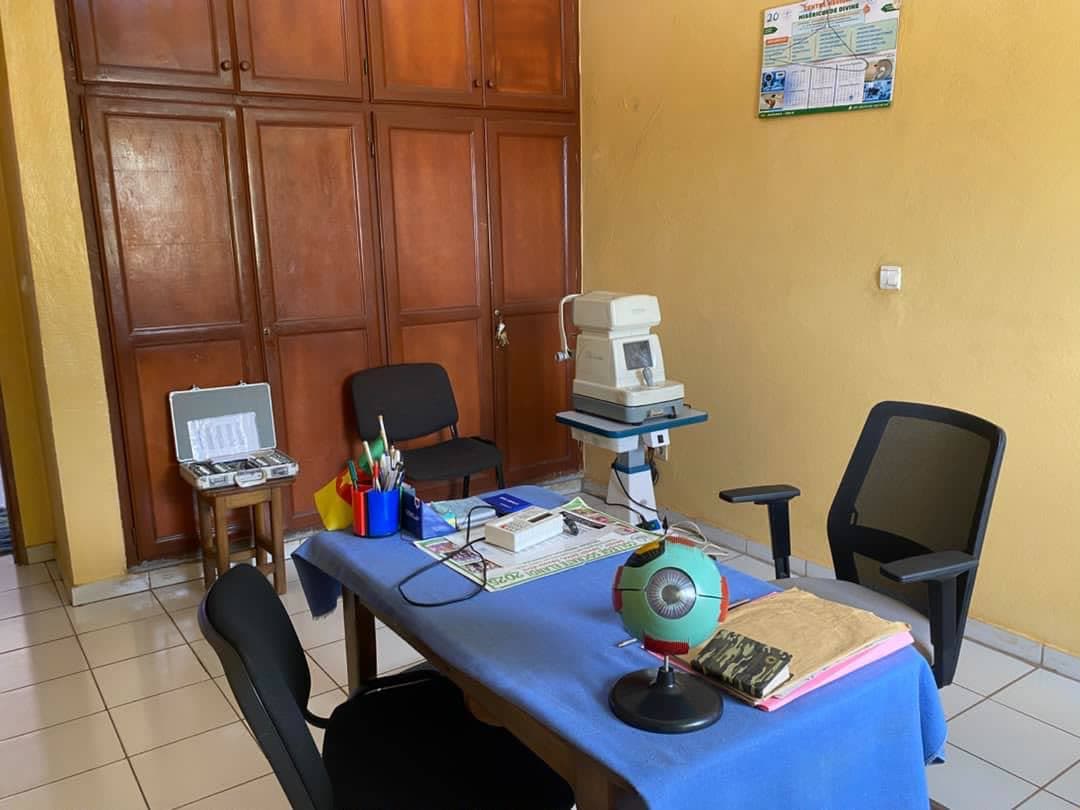
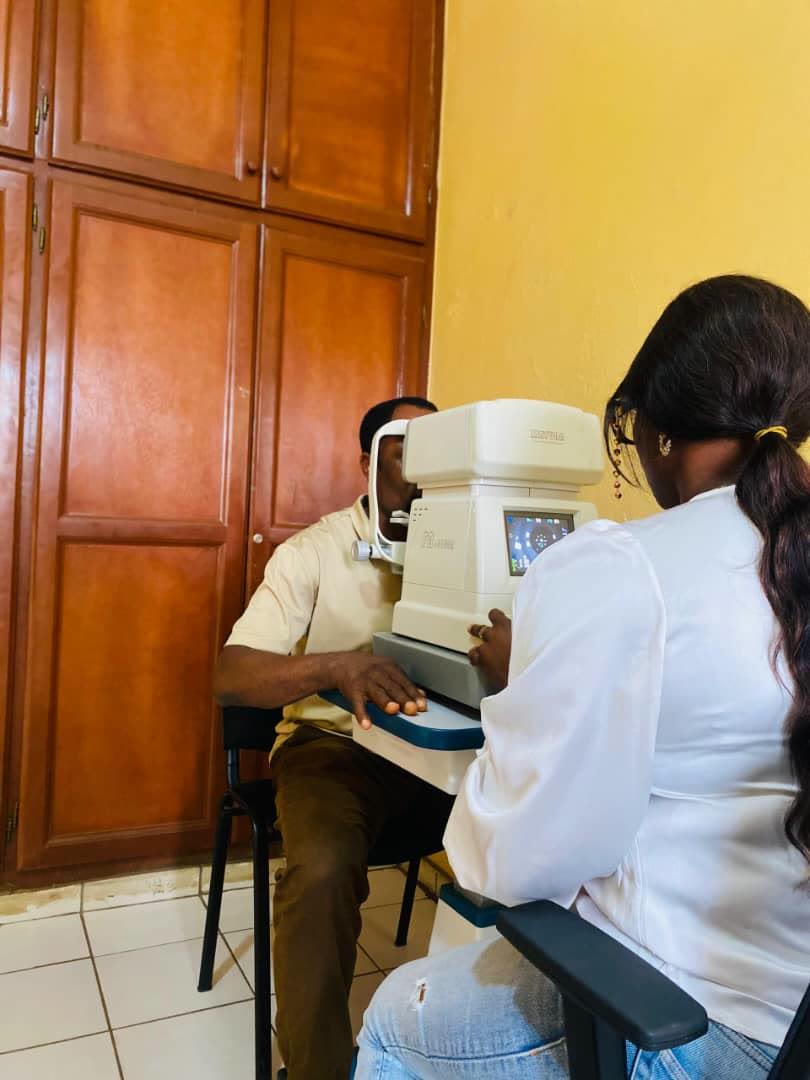
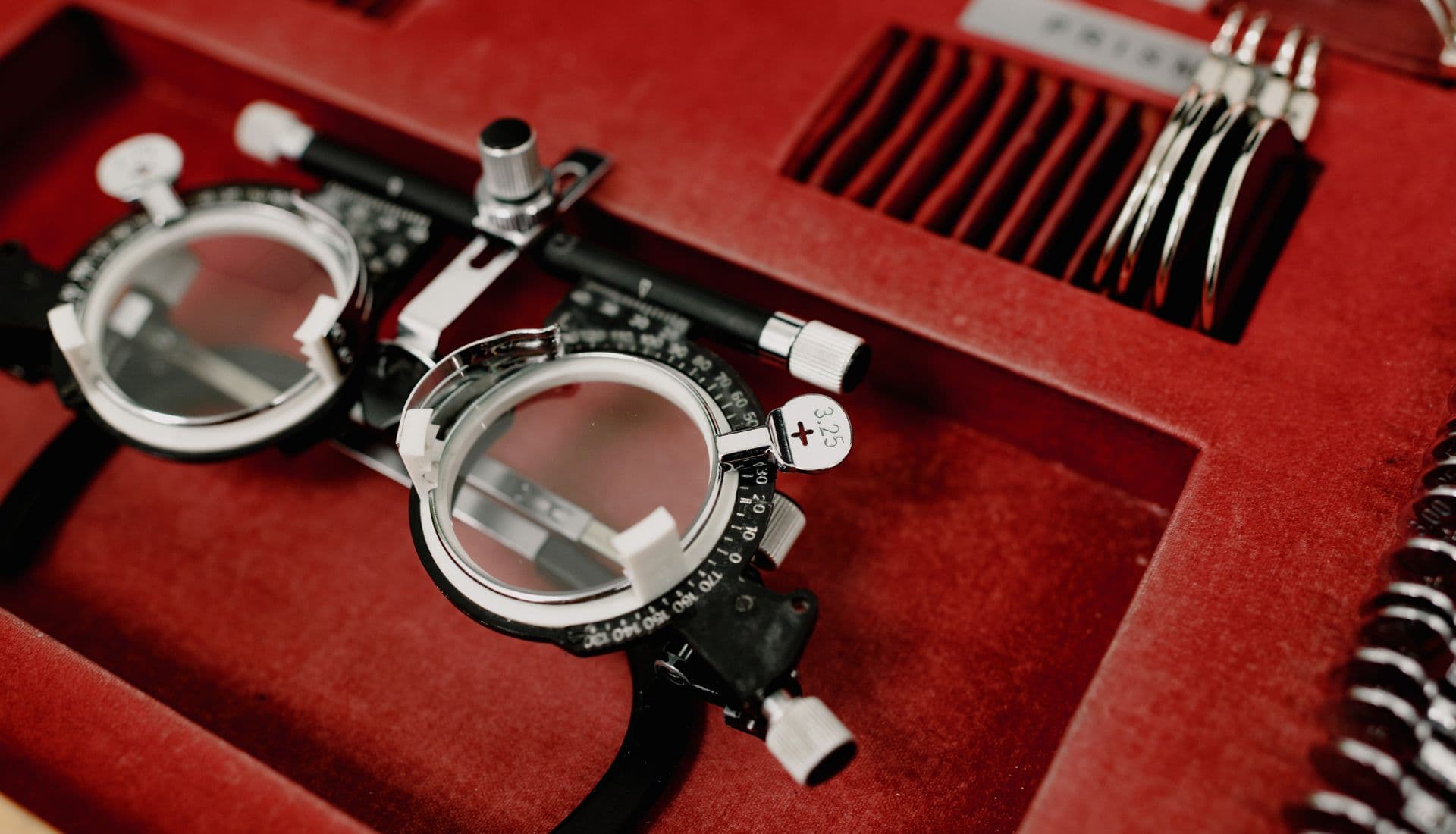
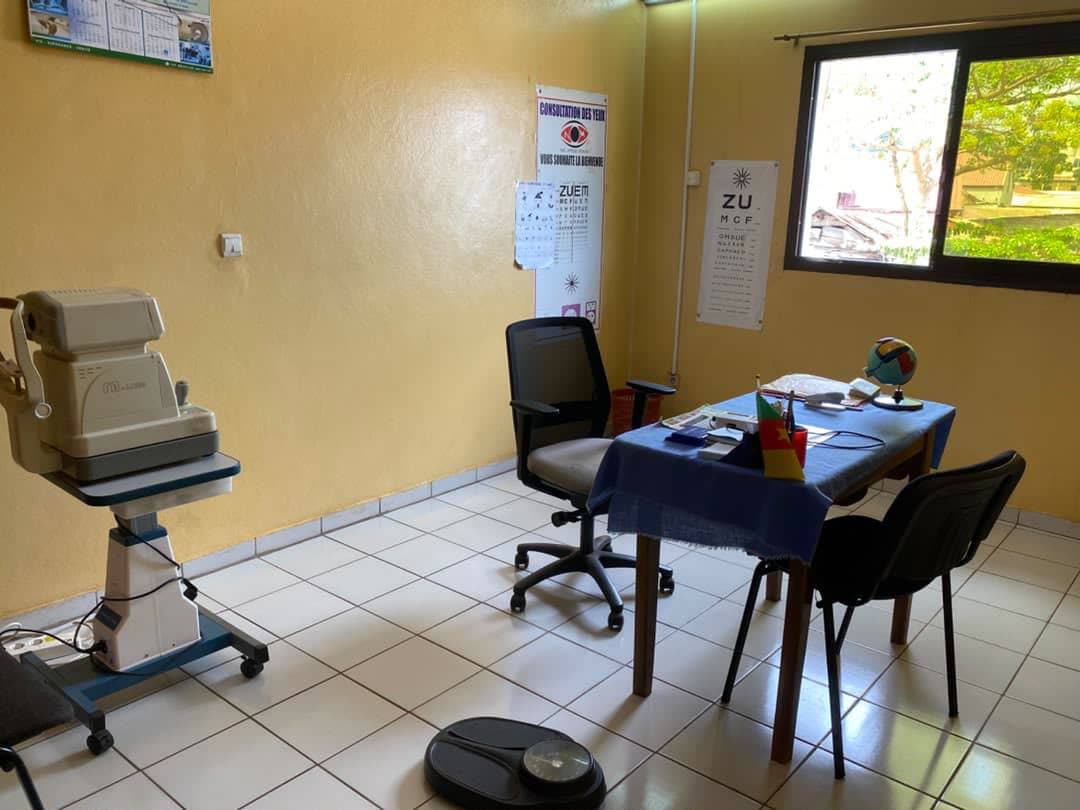
According to the MSD Manuals, a medical reference written for the general public, it is often done in two stages. A machine called an autorefractor shines a beam of light into the eye and, within seconds, gives a first estimate of the correction. The examiner then fine-tunes it by asking you to compare lenses while you look at a letter chart.
This is the famous "better like this, or like this?" moment. There are no wrong answers, only honest ones: nobody is marking you.
How does an eye exam work, step by step?
You stay seated throughout, it takes a few steps, and nothing touches your eye. In Cameroon, as in France, distance vision is often written in tenths: the MSD Manuals explain that 10/10 means you see at 6 metres what a person with perfect vision sees at the same distance.
- Questions: what bothers you, since when, the work you do, the glasses you wear now.
- The automatic reading: you look into the autorefractor, which gives a first estimate.
- Distance vision: you read smaller and smaller letters on a chart set at a distance. For people who cannot read, the MSD Manuals note that there are charts with a letter E turned in different directions.
- Fine-tuning: lenses are compared in front of each eye until you find the sharpest, most comfortable vision.
- Near vision: you read a text held at reading distance, about 35 centimetres.
- The result: a written correction for each eye, used to make your lenses.
Along the way you will find out that the bottom line of the chart really does exist, and that it was not put there just to humble people.
Is an eye exam a medical examination of the eyes?
No. An eye exam measures your vision and your correction. It does not diagnose disease and it does not treat anything.
The MSD Manuals describe the full eye examination done by an ophthalmologist, the eye doctor: among other things, it covers the visual field, a look at the back of the eye, and the pressure inside the eye. They also point out that some eye diseases cause few or no symptoms at first, which is why regular check-ups matter.
Seeing clearly with new glasses therefore tells you nothing about the back of the eye. It is a bit like washing the windscreen: the road looks sharper, but nobody has opened the bonnet. The two checks are different, and one does not replace the other.
This article is general information and does not replace an eye exam. If you have pain, a red eye or a sudden loss of vision, see an ophthalmologist without delay.
When should I have my sight checked?
Regularly, even if nothing bothers you: the MSD Manuals advise having your eyes checked every 1 to 2 years, or more often if you have an eye condition.
- You squint to read a road sign or a taxi's number.
- You hold your phone further and further away to read a message. At this rate you will soon need longer arms.
- Your eyes feel tired, or your head feels heavy, after long reading or a day at a screen.
- Your child sits very close to the television or struggles with the board at school.
- Your glasses are more than two years old, or no longer seem as sharp.
Some signs are also good reasons not to wait. They are not a diagnosis, just an invitation to get checked.
Where can I get an eye exam in Yaoundé, and what does it cost?
Niss Optique Médical, a licensed optical practice, is at Descente Fanta Citron, Mvog-Ada, opposite the Direction des Mines. It is open Monday to Friday, 8:30 to 17:30, Saturday and public holidays, 9:00 to 15:30, and Sunday by appointment.
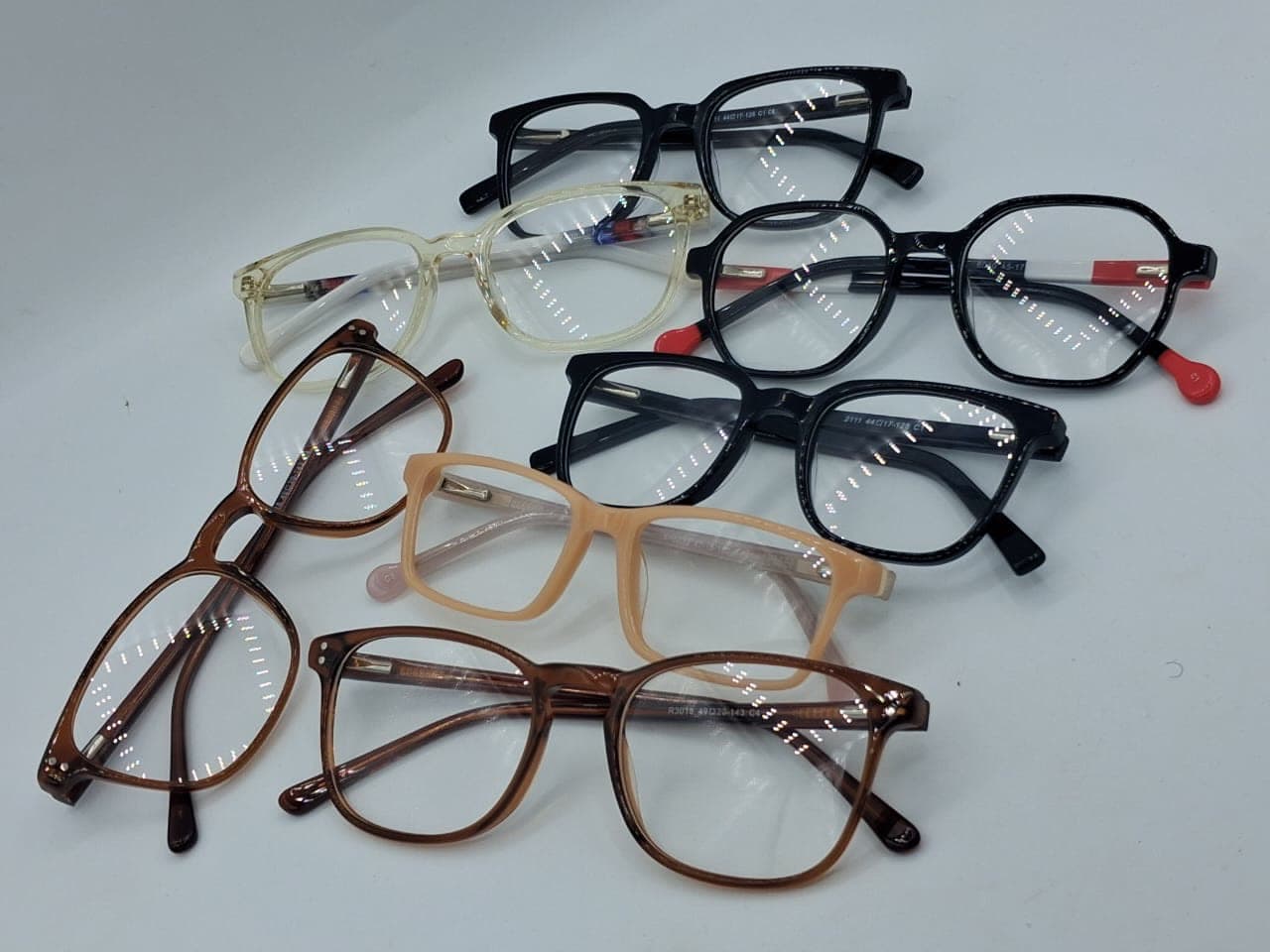
The eye exam and refraction are carried out by a refracting optician registered with the ONOC, Cameroon's national order of opticians. The exam costs 5,000 XAF, and it is free if you buy your glasses the same day. Glasses are ready in 24 hours, progressive lenses included; special-order lenses take 10 working days. The price of the lenses depends on the correction measured, so ask for a quote.
Message 699 27 75 97 on WhatsApp, or call 651 10 22 00 or 651 88 59 90. And if you cannot find your current glasses as you head out, check the top of your head first.
Frequently asked questions
- What is the difference between an eye exam and a refraction?
- Refraction is the part of the eye exam that measures how the eye focuses and works out the correction. The eye exam also covers questions about your needs and the testing of distance and near vision.
- Does an eye exam hurt?
- No. You stay seated and look into a machine, then through trial lenses. Nothing touches your eye.
- How often should I have my sight checked?
- The MSD Manuals advise having your eyes checked every 1 to 2 years, or more often if you have an eye condition.
- How much does an eye exam cost in Yaoundé?
- At Niss Optique Médical in Mvog-Ada, an eye exam costs 5,000 XAF. It is free if you buy your glasses the same day.
Written by the Niss Optique Médical team, under the responsibility of its ONOC-registered refracting optician (N° 155/ONOC/2023).
This article gives general information. It does not replace an eye exam. For pain, a red eye or a sudden loss of vision, see an ophthalmologist.