Blue light glasses for kids: are they worth it?
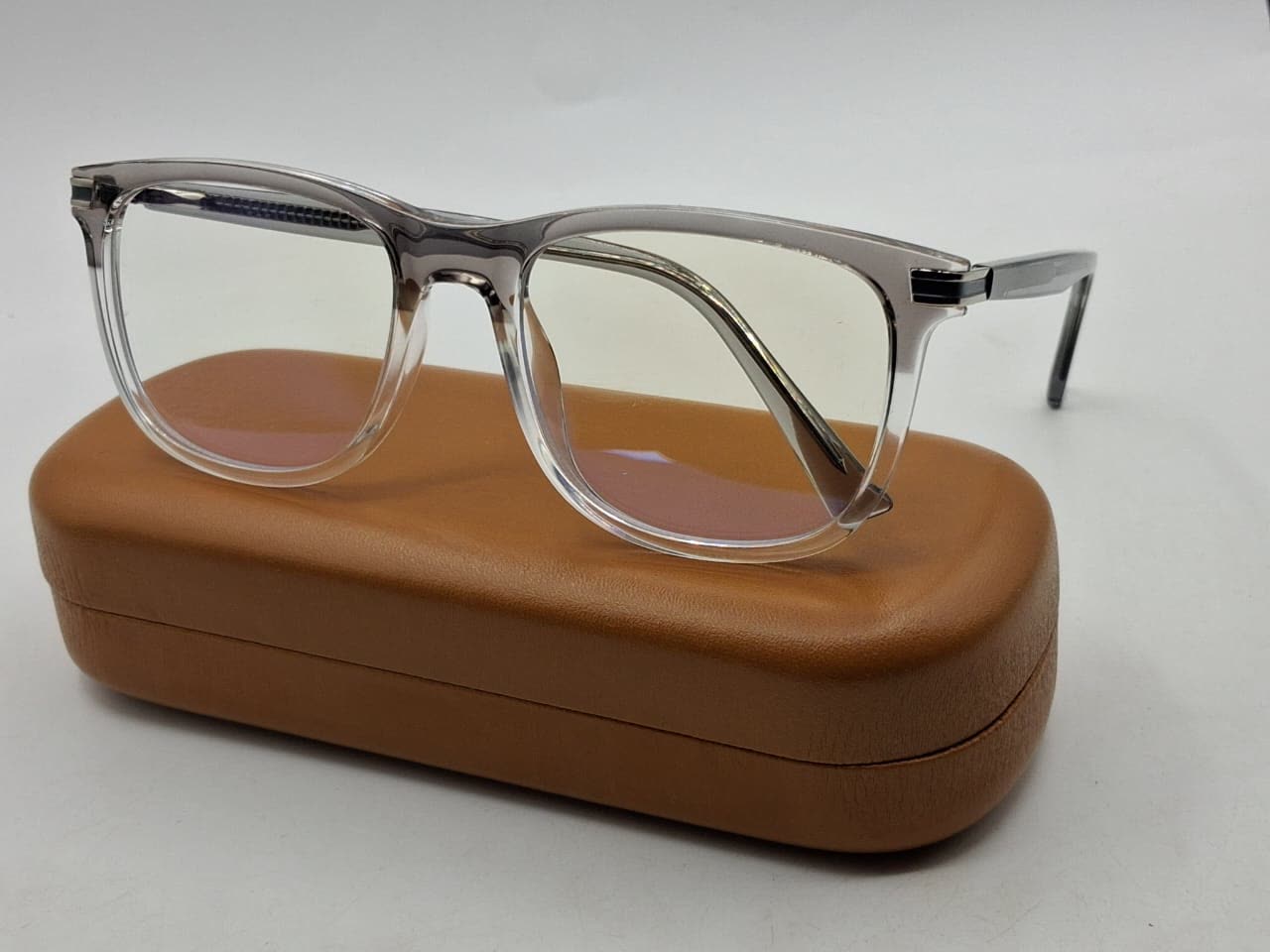
Short answer: For children, there is no proof that they help. The American Academy of Ophthalmology does not recommend blue light glasses, because there is no evidence that light from screens damages the eyes, and the main review of these lenses, published by Cochrane in 2023, only studied adults. Limiting screen time, taking breaks and playing outdoors help more.
What do blue light glasses for kids promise?
Mainly to shield a child's eyes from screen light: less eye strain, better sleep, and sometimes protection for the retina.
Many sales pages add that a child's eyes are more fragile, so they need a filter even more. The real question is what health bodies say. Parents know the drill: when a child announces that "everybody at school has one", you check anyway.
Are blue light glasses useful for a child?
Nothing shows that they are. The American Academy of Ophthalmology, the professional body for eye doctors in the United States, says so on its page about children and screens, updated in July 2026: there is no scientific evidence that light from computer screens damages the eyes. For that reason it does not recommend blue light glasses or any special eyewear for computer use.
The most thorough review of these lenses, published in 2023 by Cochrane, an international network that grades medical research, looked at adults only: 17 trials and 619 people. It found that the lenses may not reduce short-term eye strain from computer work, and that their effect on sleep is unclear. For children, there is not even that much to go on.
A coating remains an option, but it does not replace any of the habits below. No lens, however clever its coating, has ever switched off a tablet at bedtime.
How much screen time is right for a young child?
For children under 5, the World Health Organization (WHO) set clear markers in its 2019 guidelines. The American Academy of Ophthalmology does not set its own limit, but points parents to the WHO's.
- Under 1 year: no screen time.
- At 1 year: no time sitting in front of a screen, such as TV or videos.
- At 2 years: no more than 1 hour a day, and less is better.
- From 3 to 4 years: no more than 1 hour a day, and less is better.
The WHO suggests active play, good sleep and quiet time with an adult instead: reading, stories, puzzles. Some negotiation may be needed. With a three-year-old, it is diplomacy at the highest level.
Which habits protect a child's eyes at a screen?
Breaks, the right distance and a well-adjusted screen. That is the American Academy of Ophthalmology's advice to parents, and it works just as well for adults.
- Take breaks: look up and gaze into the distance for a moment, for example after each level of a game or each episode.
- Remember to blink: blinking keeps the eyes moist.
- Keep the screen at arm's length, slightly below the face.
- Set brightness and contrast so they stay comfortable, and avoid screens outdoors or in very bright spots, where glare adds strain.
The Academy explains that screen-related eye strain (dry, itchy eyes, blurred vision, headaches) is temporary and does no lasting damage. It adds that screen use too close to bedtime can harm sleep quality. One of its tips for books: slip a paperclip in every few chapters as a reminder to look up. A paperclip beats a timer on one point: it never goes off in the middle of the most exciting chapter.
Why is playing outside good for the eyes?
Because time outdoors can slow the progression of myopia, or short-sightedness, the condition that makes distant things look blurred.
The American Academy of Ophthalmology cites a study in its journal, Ophthalmology: part of the worldwide rise in short-sightedness seems linked to close work, books as well as screens, and to time spent indoors. Time outdoors, especially in early childhood, can slow its progression.
In other words, the most serious protection is not an accessory. It is the yard, the neighbourhood, the football pitch. And a child running around outside has one more merit: for that hour, nobody is asking for your phone.
When should I have my child's eyes checked?
As soon as something makes you wonder, without waiting for a complaint: children do not always know how to say they cannot see well. The signs below are not a diagnosis, only an invitation to get checked.
- They sit very close to the TV, or hold the tablet right up to their face.
- They squint to see far away, or struggle to read the board at school.
- They often rub their eyes, or complain of headaches after homework.
- They tilt their head or close one eye to look at something.
This article is general information and does not replace an eye exam. If your child has pain, a red eye or a sudden loss of vision, see an ophthalmologist without delay.
And if they only sit glued to the screen during their favourite cartoon, it may just be enthusiasm. Better to check all the same.
Where can I get a child's eyes checked in Yaoundé?
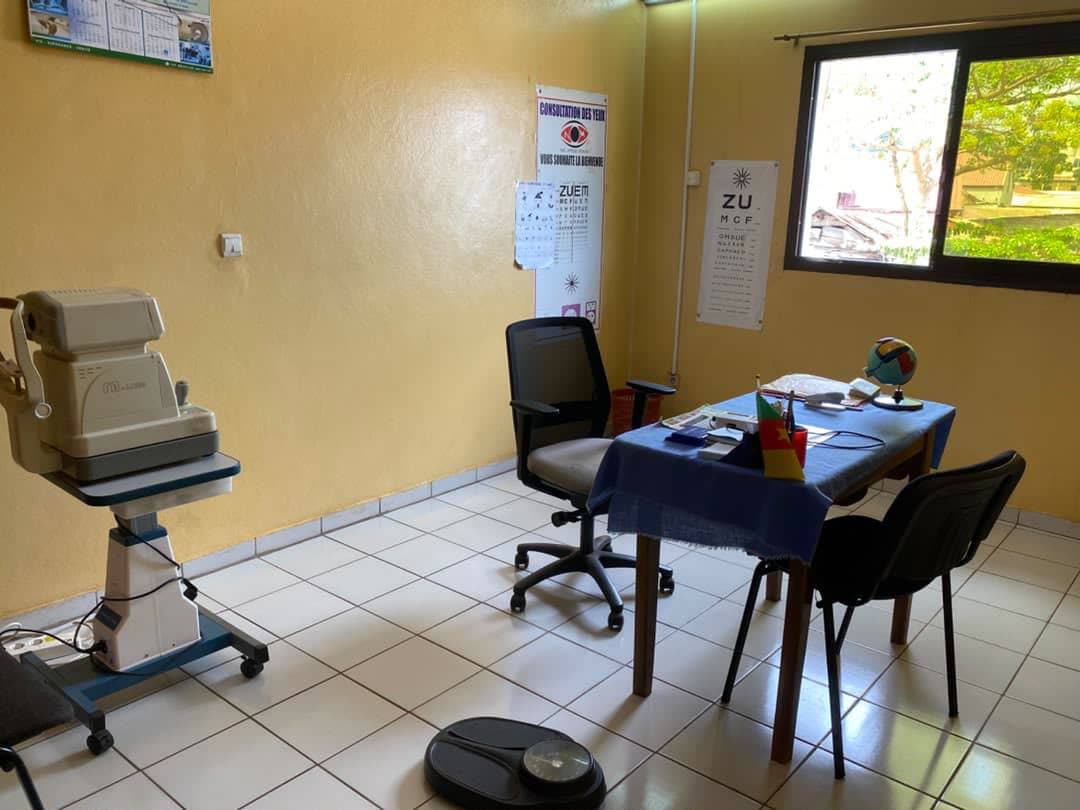
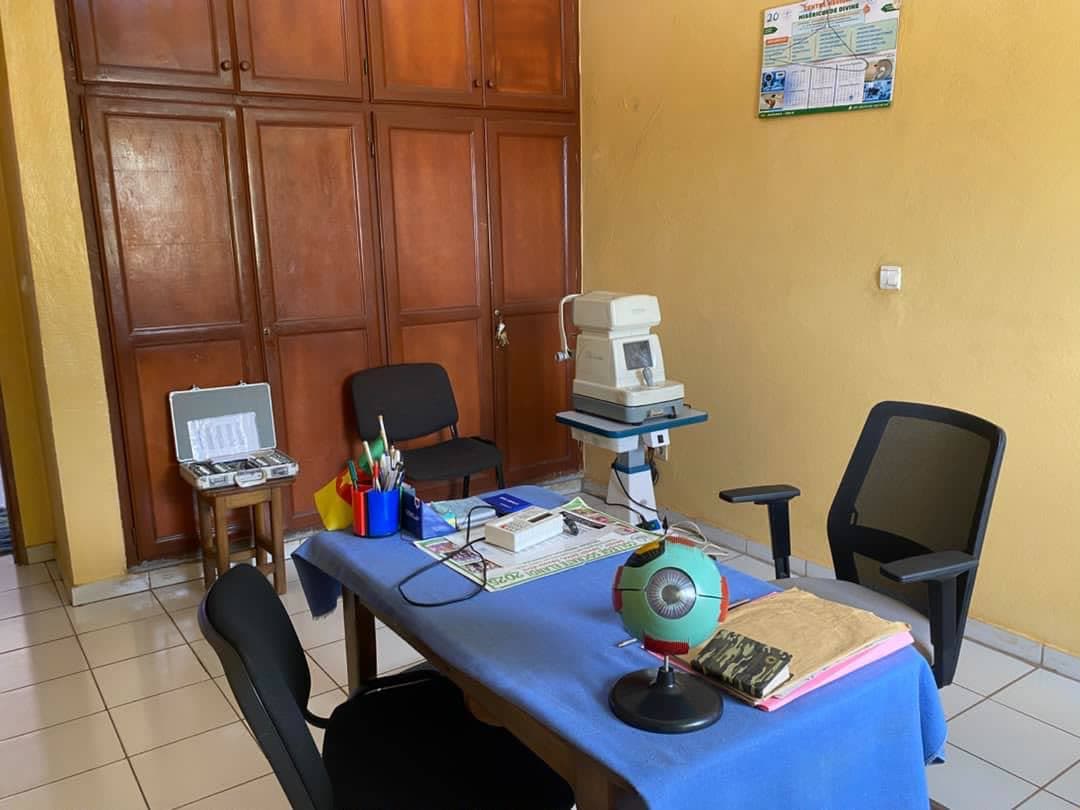
Niss Optique Médical, a licensed optical practice, is at Descente Fanta Citron, Mvog-Ada, opposite the Direction des Mines. It is open Monday to Friday, 8:30 to 17:30, Saturday and public holidays, 9:00 to 15:30, and Sunday by appointment.
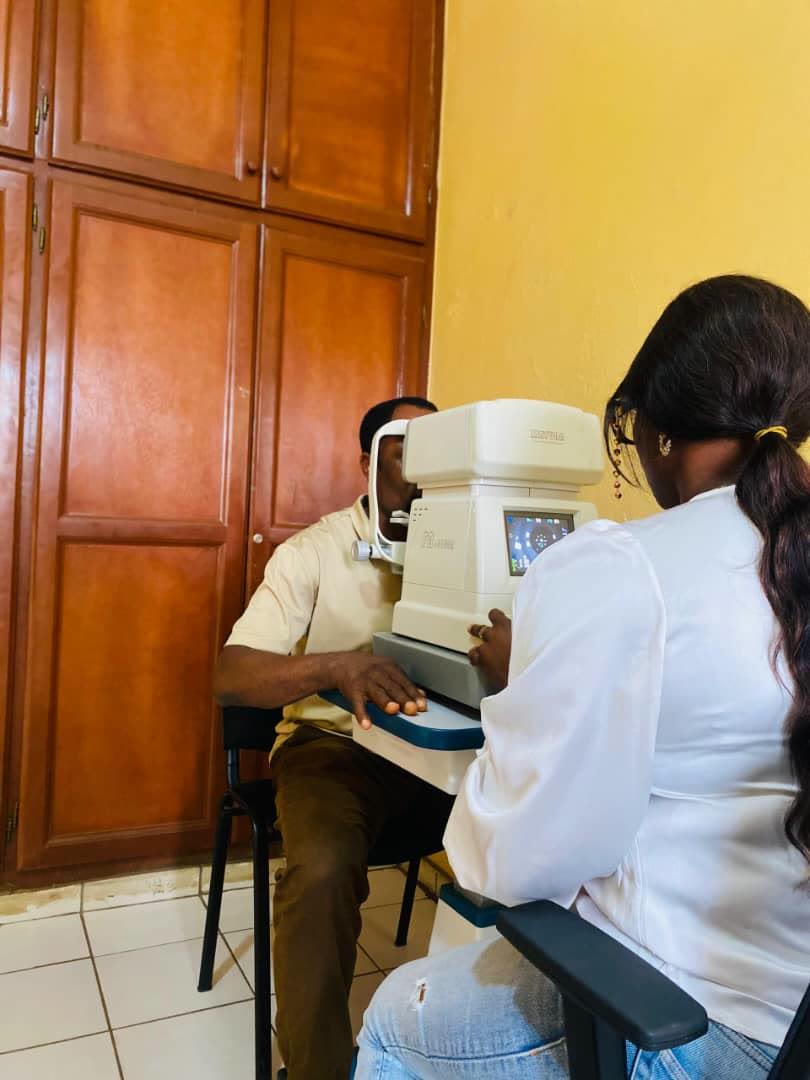
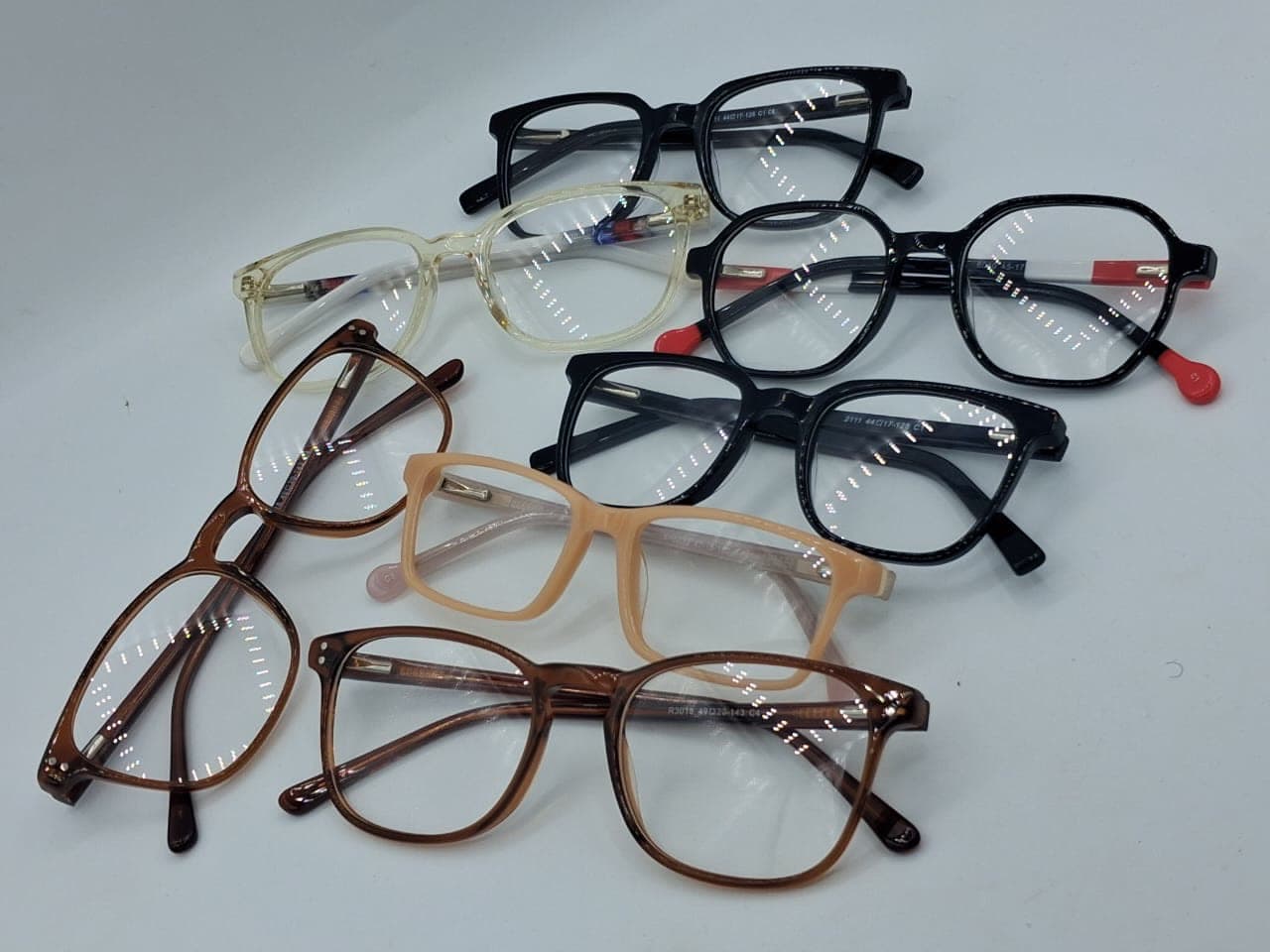
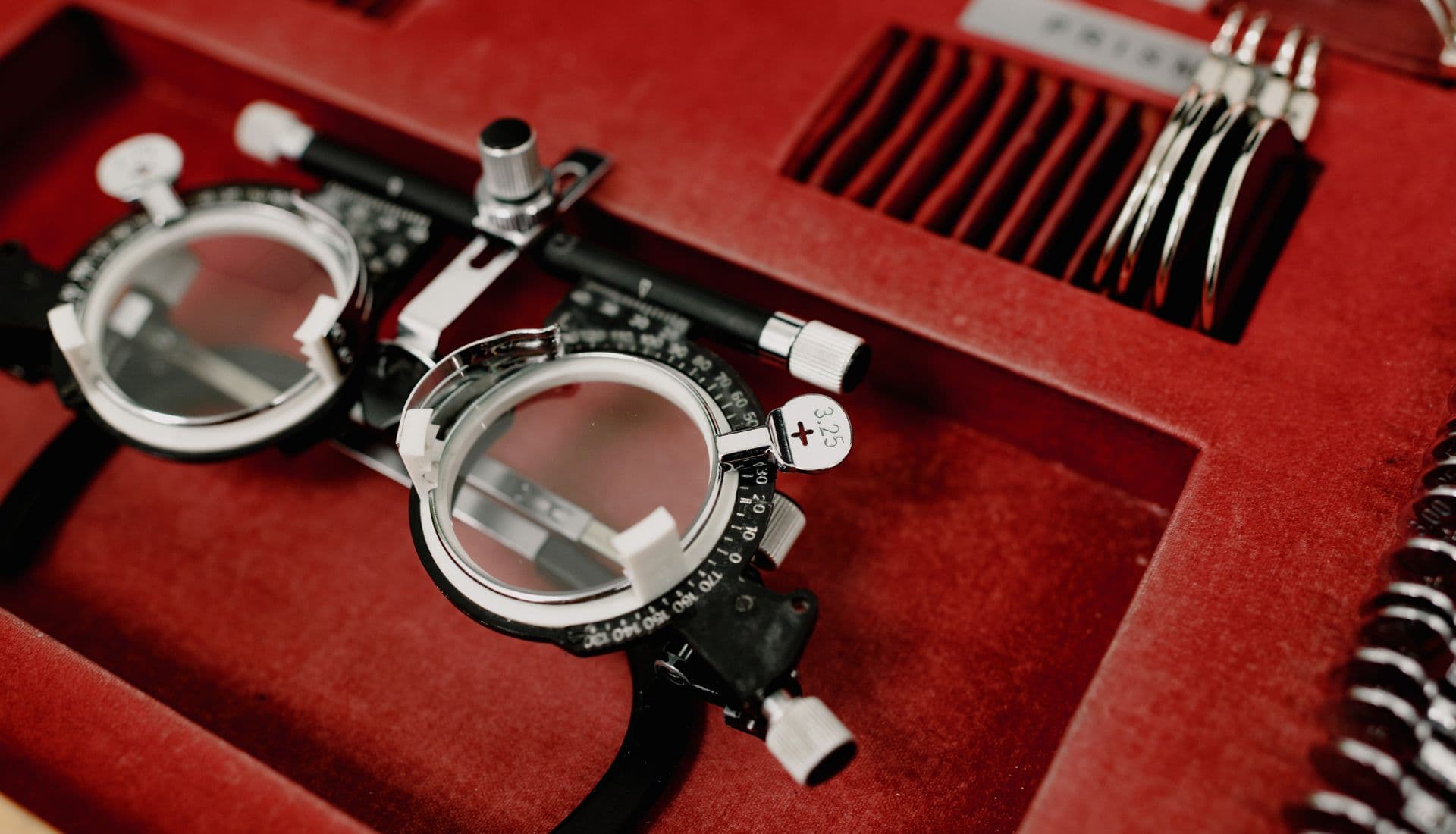
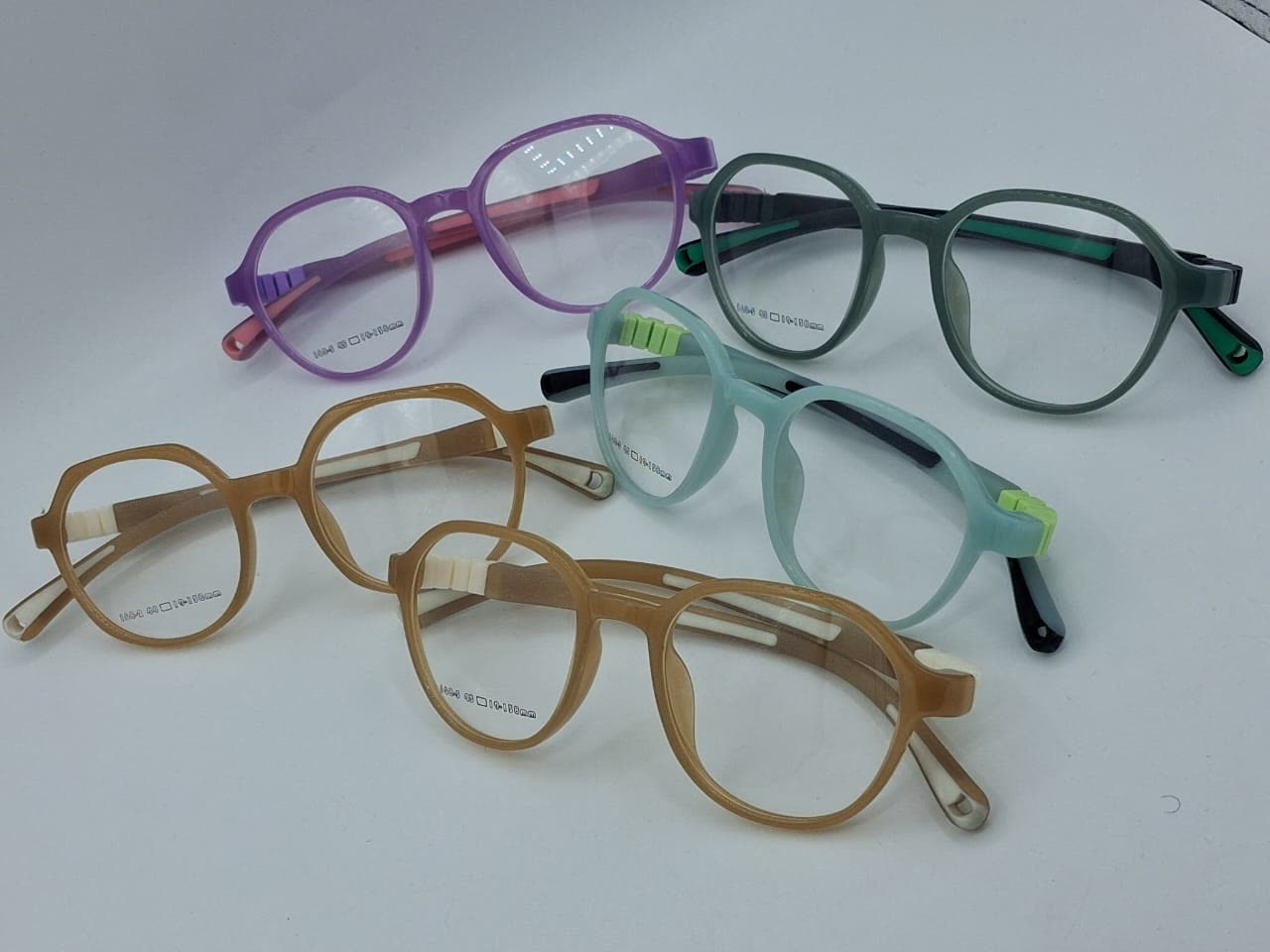
The eye exam is carried out by a refracting optician registered with the ONOC, Cameroon's national order of opticians. It costs 5,000 XAF, and it is free if you buy the glasses the same day. The practice's frames range from 10,000 to 100,000 XAF, and it has frames for children. Glasses are ready in 24 hours; special-order lenses take 10 working days. For the price of lenses and coatings, ask for a quote.
Message 699 27 75 97 on WhatsApp, or call 651 10 22 00 or 651 88 59 90. Bring your child, of course. The tablet can stay at home.
Frequently asked questions
- From what age can a child wear blue light glasses?
- No recognised health body sets an age, because there is no proof that they help. On its page about children and screens, the American Academy of Ophthalmology does not recommend blue light glasses.
- Do screens damage children's eyes?
- According to the American Academy of Ophthalmology, there is no scientific evidence that light from screens damages the eyes. Screen-related eye strain is temporary. Long periods of close work and too little time outdoors are, however, linked to short-sightedness.
- How much screen time a day for a 3-year-old?
- The WHO recommends no more than 1 hour of screen time a day for children aged 3 to 4, and less is better. It does not recommend screen time before age 2.
- How can I protect my child's eyes at a screen?
- Have them take breaks to look into the distance, keep the screen at arm's length, adjust the brightness and encourage outdoor play. If in doubt, have their sight checked.
Written by the Niss Optique Médical team, under the responsibility of its ONOC-registered refracting optician (N° 155/ONOC/2023).
This article gives general information. It does not replace an eye exam. For pain, a red eye or a sudden loss of vision, see an ophthalmologist.