Glasses frames for men and women: how to choose
Short answer: Choose a frame for the size of your face and for your prescription, not for the men's or women's shelf. Your eyes should sit near the centre of each lens, the bridge should rest on your nose without pinching, and the arms should hold behind your ears. For strong lenses, a light frame that is not oversized keeps the lenses thinner and lighter.
Are men's frames really different from women's frames?
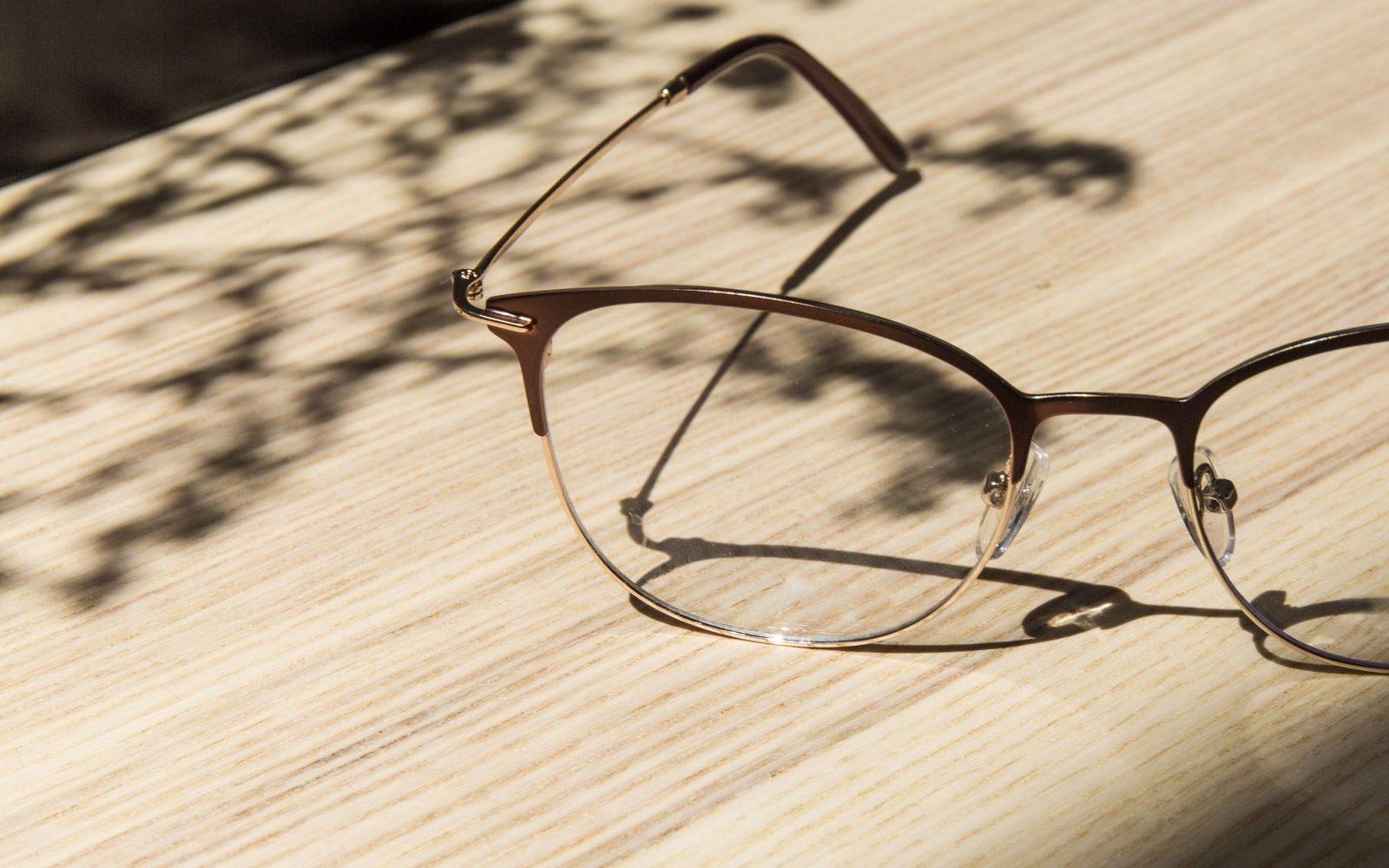
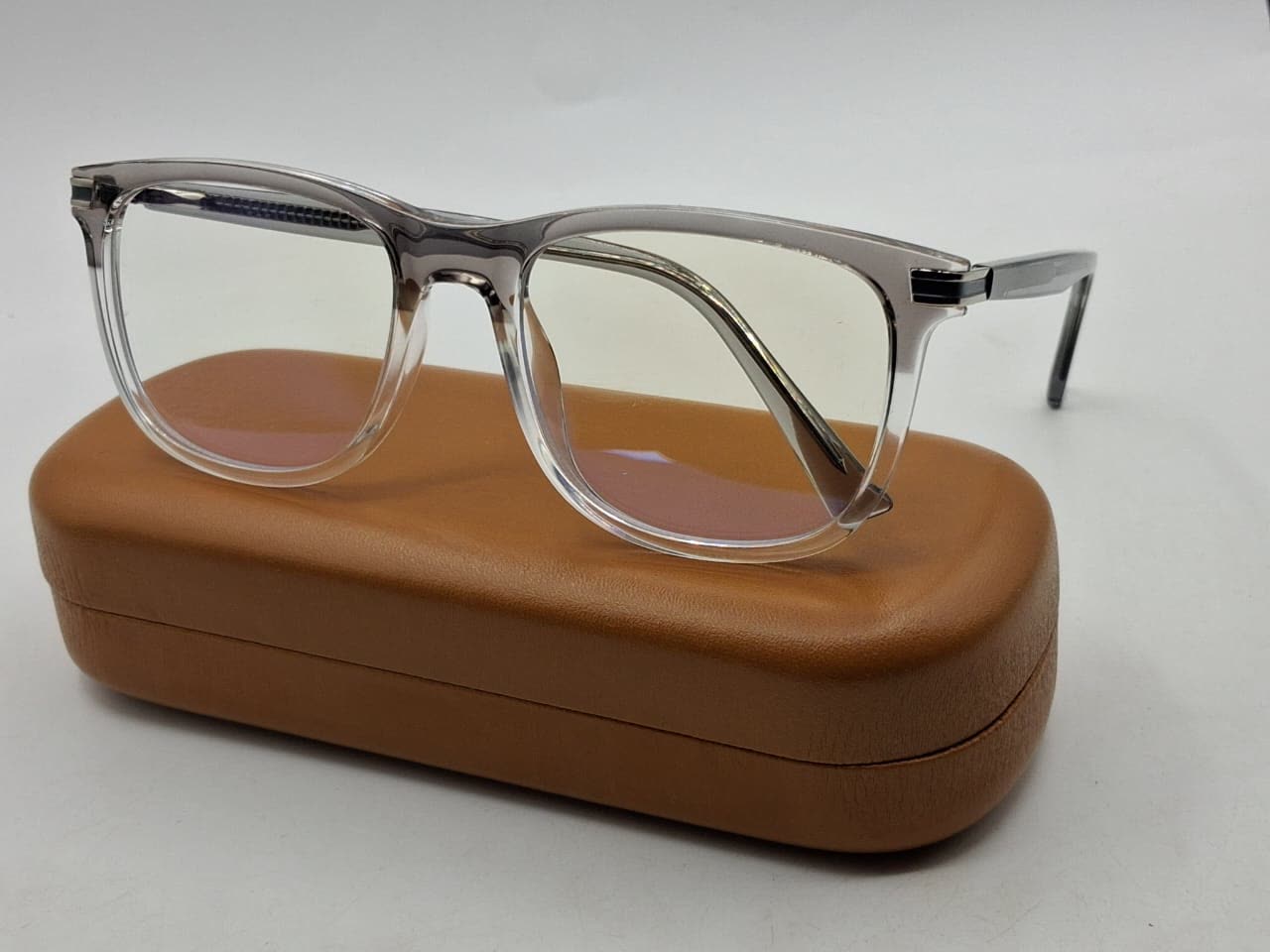
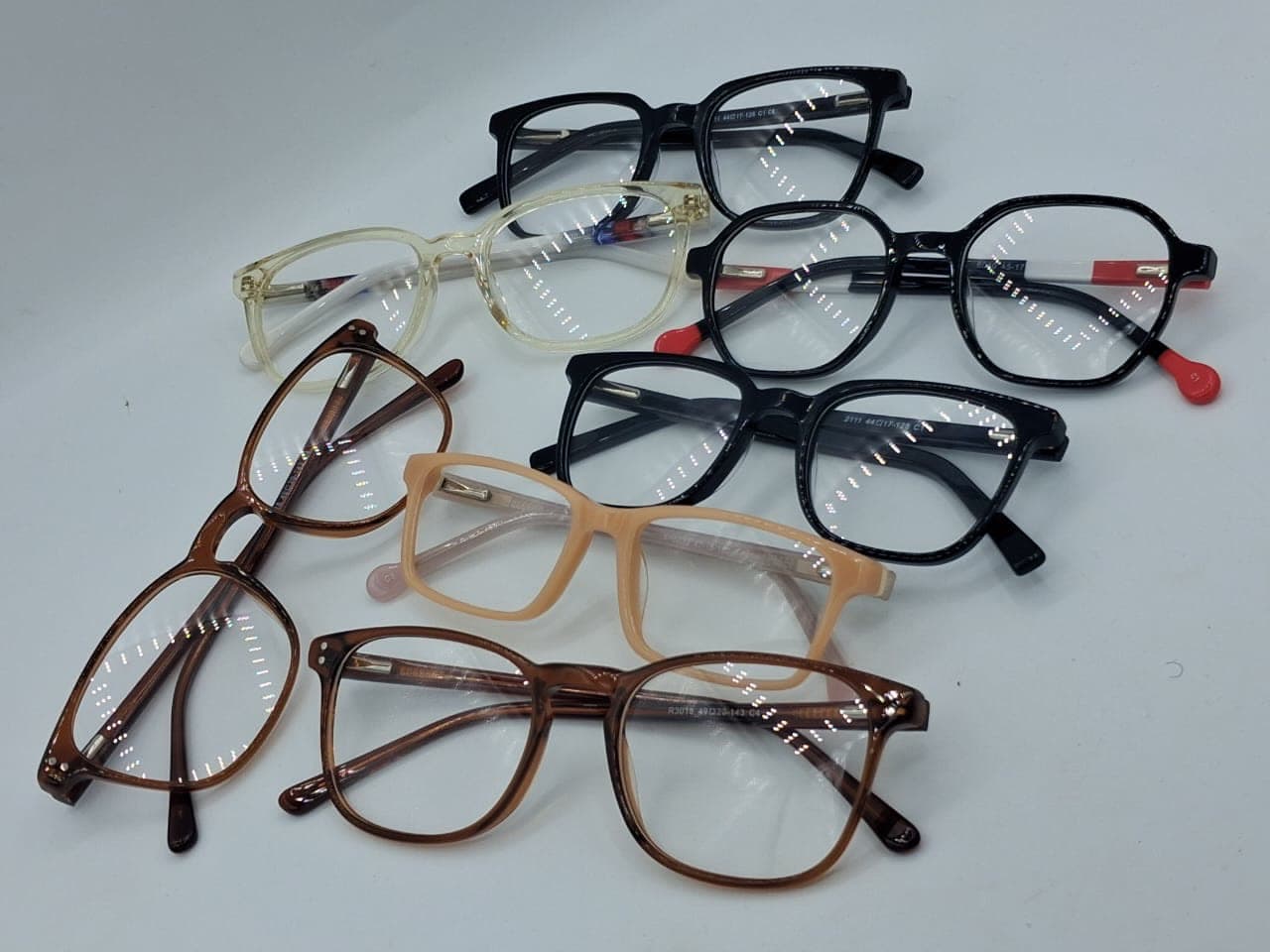
Not really. What sets one frame apart from another is its size, shape, material and colour, not the shelf it sits on. Plenty of frames suit men and women equally well.
A woman can wear a square black frame and a man a round clear one. What matters is how it looks in the mirror and how it feels at the end of a long day. The mirror does not read labels.
How do you know a frame is the right size?
A frame that fits stays put on its own, without squeezing or sliding. All About Vision (a page reviewed by a certified optician, updated in April 2026) explains that the size is usually printed inside one of the arms as three numbers in millimetres: the width of one lens, the width of the bridge, then the length of the arm, for example 52-18-140.
- Your eyes sit roughly in the centre of each lens.
- The bridge, the part joining the two lenses, rests on your nose without pinching.
- The frame is no wider than your face and does not press on your temples.
- The arms go behind your ears without digging in.
- The glasses stay where they are when you look down to read a message.
Those numbers are handy for comparing with your current glasses, but nothing beats trying the frame on. In front of the mirror, check that:
Does your prescription change which frame you should choose?
Yes, especially if your lenses are strong. The American Optometric Association's clinical guideline on presbyopia says that, to reduce the thickness and weight of glasses, frames should be strong but light, no larger than your face needs, and chosen so their centres sit close to the distance between your pupils.
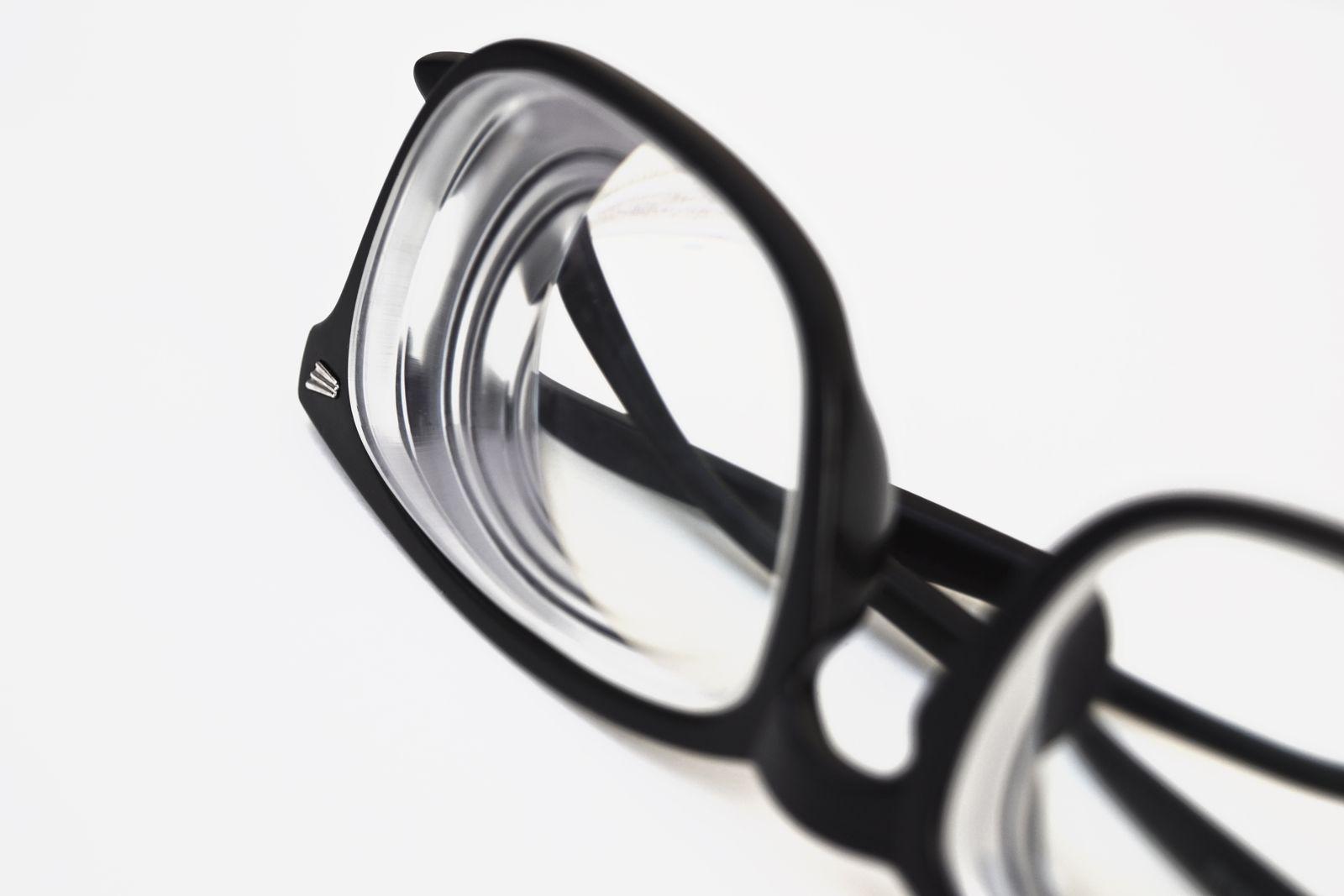
The same guideline says thinner, high-index lenses are worth considering for strong prescriptions, generally above 6 dioptres of short or long sight. The American Academy of Ophthalmology adds that these thin, light lenses reduce the “bottle-bottom” look. A big statement frame can quickly turn heavy on the nose, so it helps to know before you fall in love with it.
That is why choosing a frame works best with a recent prescription in hand. This article is general information and does not replace an eye exam.
Metal or plastic: which material should you pick?
Each material has its strengths. In its guide to frame materials, the American Academy of Ophthalmology sums up the main ones like this:
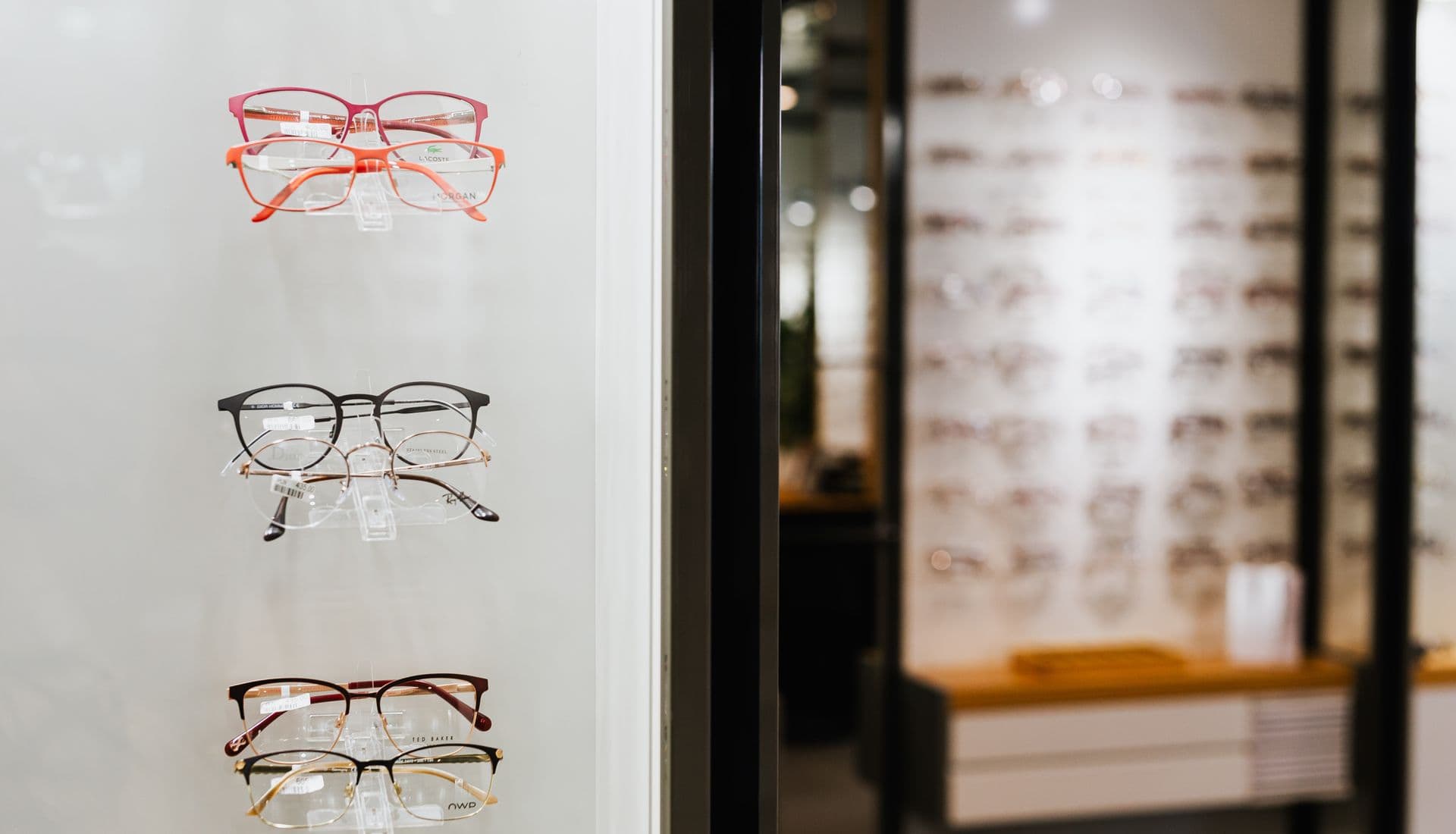
- Plastic: the most popular choice, usually cheaper, light and available in many colours; it breaks more easily than metal and its colour can fade over time.
- Titanium: very strong, light, corrosion-resistant and hypoallergenic, useful if nickel irritates your skin.
- Stainless steel: light and strong, not quite as light as titanium, and often cheaper than other metals.
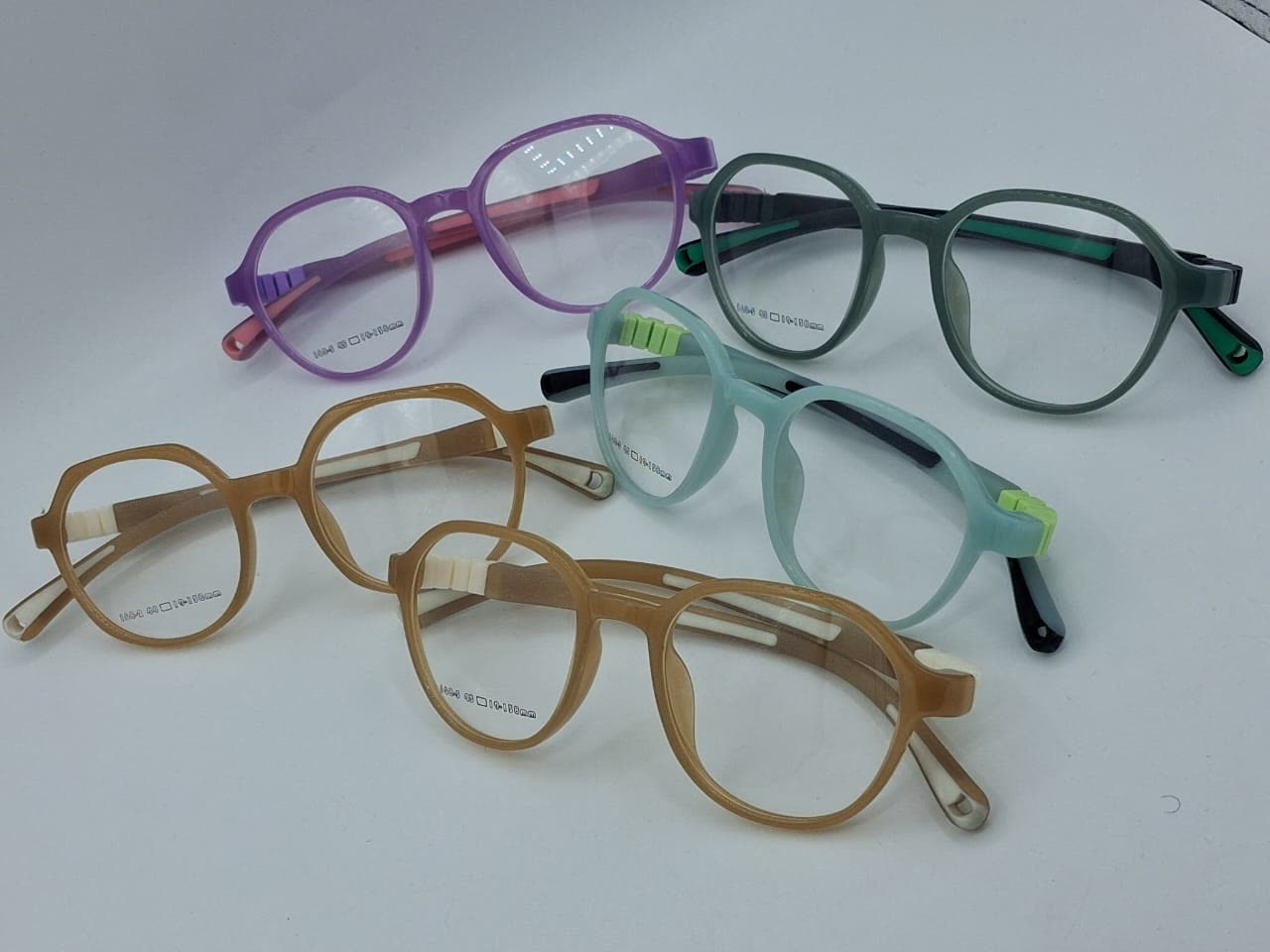
- Soft plastic: recommended for babies and small children, who are hard on their glasses.
- Rimless (drilled) frames: light, but they need suitable lenses such as polycarbonate.
In hot weather, when you sweat, a frame that resists corrosion is a real plus. And if you tend to leave your glasses on the sofa, go for sturdy: the sofa never warns anyone before they sit down.
How should you try frames on?
Take your time and test them the way you will use them: a frame is judged on your face, not on the display. A few habits help:
- Bring your current glasses, so you can say what bothered you about them.
- Come with a recent prescription, or have your eye exam on the spot.
- Move: look down, turn your head, smile. The frame should stay in place.
- Look at yourself from the front and the side, with your usual hairstyle.
- Ask someone honest for their opinion, not the friend who says yes to everything.
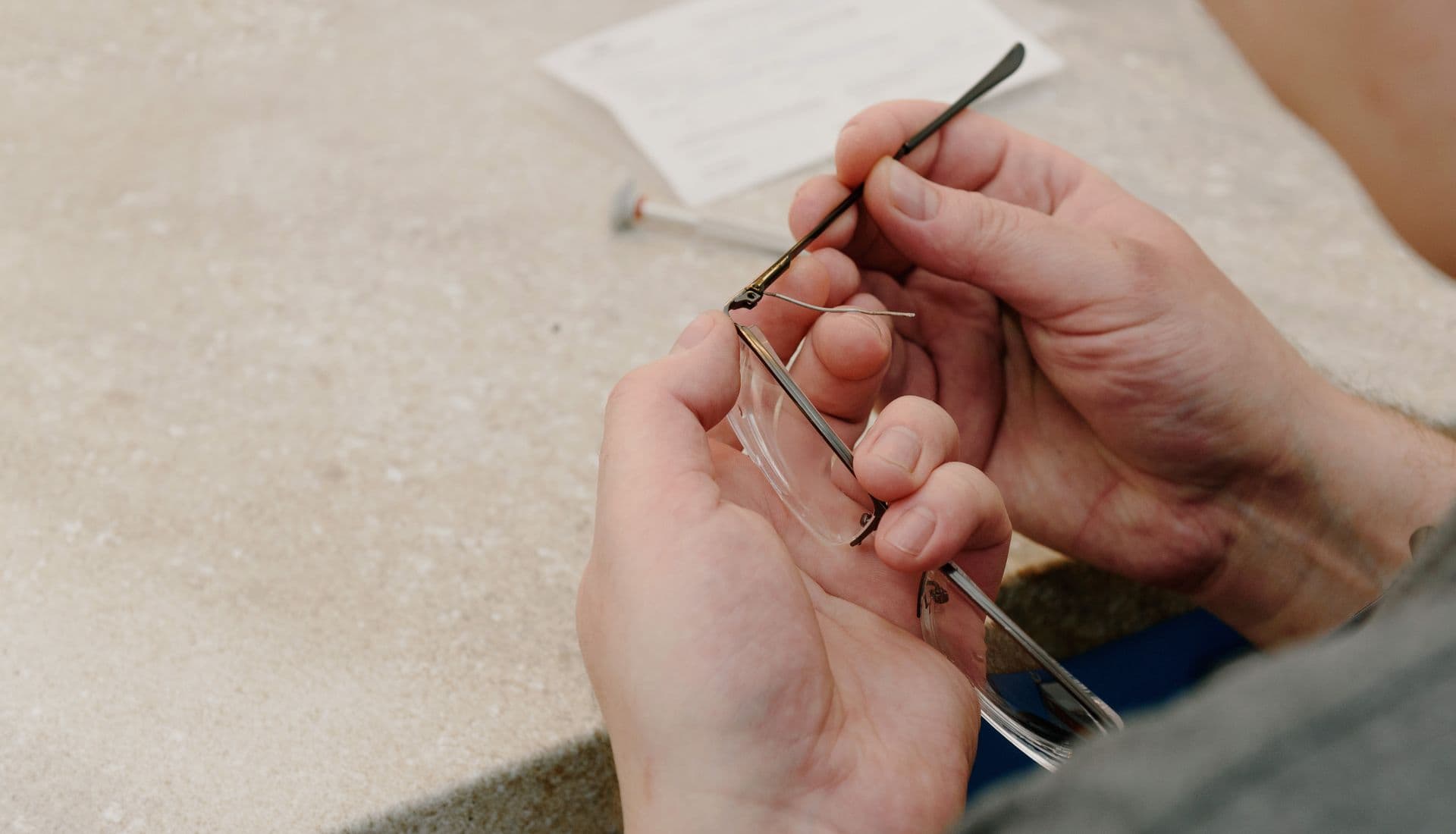
Once the lenses are fitted, the frame can still be adjusted. In its guide to the parts of a pair of glasses, the American Academy of Ophthalmology notes that the pad arms holding the nose pads can be adjusted to fit the shape of your face.
How much does a frame cost, and what sets the price?
At Niss Optique Médical, frames range from 10,000 to 100,000 XAF. From one frame to the next, the price varies with the model and the material; the American Academy of Ophthalmology notes, for example, that plastic is usually cheaper.
The frame is only part of the bill: lenses are priced separately, according to your prescription, and our article on lens prices in Cameroon explains what makes them vary. A 100,000 XAF frame does not correct your sight any better than a 10,000 XAF one. The lenses do the work; the frame mostly starts conversations.
Where can I choose a frame in Yaoundé?
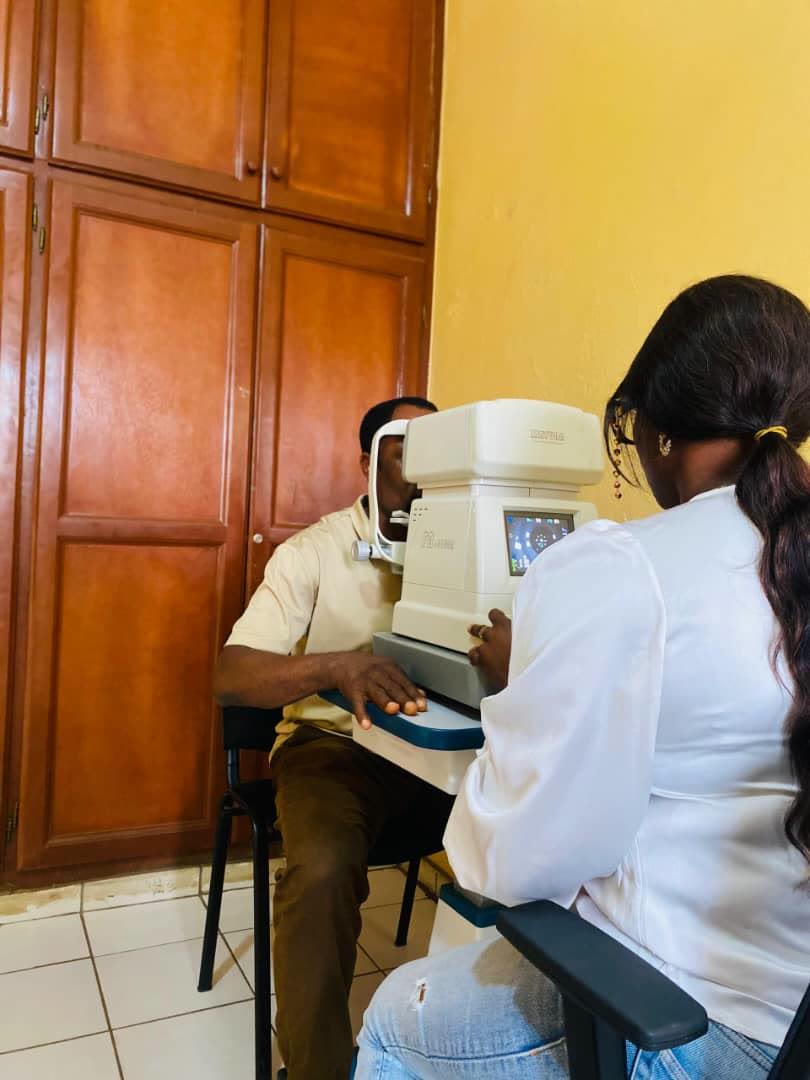
At Niss Optique Médical, Descente Fanta Citron, Mvog-Ada, opposite the Direction des Mines. The eye exam is carried out by a refracting optician registered with the ONOC, Cameroon's national order of opticians. It costs 5,000 XAF, and it is free if you buy your glasses the same day.
Glasses are ready in 24 hours, progressive lenses included; some special-order lenses take 10 working days. You can pay in instalments, settled before you collect your glasses. For the price of your lenses, ask for a quote on WhatsApp at 699 27 75 97, or call 651 10 22 00 or 651 88 59 90.
Niss Optique Médical, a licensed optical practice, is open Monday to Friday, 8:30 to 17:30, Saturday and public holidays, 9:00 to 15:30, and Sunday by appointment.
Frequently asked questions
- How do I find out what frame size I need?
- Look for the three numbers printed inside one arm of your current glasses: lens width, bridge width and arm length, in millimetres. Then try frames of a similar size.
- Can a woman wear a men's frame?
- Yes. Frames have no gender: what matters is that the frame is the right size, comfortable and suited to your prescription.
- Which frame is best for strong lenses?
- A strong, light frame that is no larger than necessary, with its centres close to the distance between your pupils. This keeps the lenses thinner and lighter.
- How much does a frame cost at Niss Optique Médical?
- Frames range from 10,000 to 100,000 XAF. Lenses are extra, depending on your prescription: ask for a quote on WhatsApp at 699 27 75 97.
Written by the Niss Optique Médical team, under the responsibility of its ONOC-registered refracting optician (N° 155/ONOC/2023).
This article gives general information. It does not replace an eye exam. For pain, a red eye or a sudden loss of vision, see an ophthalmologist.