School vision screening in Yaoundé: a parent's guide
Short answer: School vision screening is a quick check of pupils' eyesight, done at school, to spot children who may not see well without saying so. It does not diagnose anything: a child who is flagged is invited to have a full eye exam. In Yaoundé, Niss Optique Médical offers this screening to schools: ask for a quote on WhatsApp at 699 27 75 97.
What is school vision screening?
It is a quick eyesight check for pupils, held at school during school hours. It sorts children into two groups: those who seem fine for now, and those who should have a fuller eye exam. It does not diagnose and it does not prescribe glasses.
Its big advantage is that it comes to the children. Parents do not have to take half a day off, and the pupil misses only a few minutes of class. Some will be sorry it was not longer, especially if it fell during the maths test.
Why screen pupils' eyesight?
Because children do not always know they cannot see well. The NHS, Britain's public health service, makes the point on its page about eye tests for children: without routine checks, a problem may go unnoticed and affect a child's development and education. A child who has never seen clearly has no way of knowing the board is supposed to be sharp.
The World Health Organization (WHO), in its fact sheet on blindness and vision impairment dated 10 February 2026, says uncorrected refractive error, a focusing problem that glasses could fix but nobody has yet, remains a leading cause of vision impairment in every country, among children and adults alike. It adds that school-age children with vision impairment can have lower levels of educational achievement.
WHO also notes that in low-income countries, two out of three people who need glasses do not have access to them. Screening does not solve that alone, but it is the first step.
What signs suggest a child cannot see well in class?
Some behaviours are a cue to get a child's eyes checked. The NHS lists several in older children; we have put them in classroom terms below. They are not a diagnosis, only reasons to check.
- Holding the exercise book or reader very close to the face, or often losing their place when reading.
- Complaining of headaches or tired eyes.
- Rubbing their eyes a lot.
- Eyes that do not seem to point in the same direction.
- Being unusually clumsy, or struggling to catch a ball.
- Copying the board badly, or always asking the neighbour what it says.
Teachers are often the first to notice, since they watch thirty children read the same board at once. One sign on its own means little; a sign that keeps coming back deserves a check.
How does school screening work in other countries?
In France, the national health insurance fund (Assurance Maladie) and the education ministry screen children's eyesight in the first year of nursery school, at age 3 to 4 (page updated 20 July 2026). An orthoptist carries it out at school, with the parents' written consent and at no cost to them. Results are confidential and handed to parents in a sealed envelope.
In the UK, according to the NHS, a child's eyes may be checked at around 4 or 5, soon after starting school, to look for reduced vision in one or both eyes. Screening does not happen in every area; where it does not, the NHS advises an eye examination instead.
Two countries, one idea: early, at school, with the parents' agreement. We say nothing here about public programmes in Cameroon. And no, the sealed envelope is not a school report: you can open it without bracing yourself.
What should parents do after the result?
If the screening flags a difficulty, book a fuller eye exam. That is the Assurance Maladie's advice: a screening points the way, and only an exam confirms whether there is a problem. If nothing is flagged, keep an eye out anyway: a child's sight changes as they grow, and a doubt that appears later is worth checking.
This article is general information and does not replace an eye exam. And if the child has eye pain, a red eye or a sudden loss of vision, that is not a job for a screening: see an ophthalmologist without delay.
A screening result is an arrow on a signpost, not the destination.
How can a school organise a screening?
The exact format (length, number of pupils, what the screening includes) is agreed with the practice. On the school's side, a few decisions are enough.
- Tell parents in advance and collect their written consent.
- Choose a quiet, well-lit room where pupils can be seen one at a time.
- Plan what happens next: how the parents of a flagged child are told, and where the child can have an exam.
- Keep results confidential: a pupil's result is a matter for their family, not the whole class.
On the day, pick a quiet room: screening next to the playground is a bit like reading an eye chart in the middle of a football match.
How do I request a screening from Niss Optique Médical?
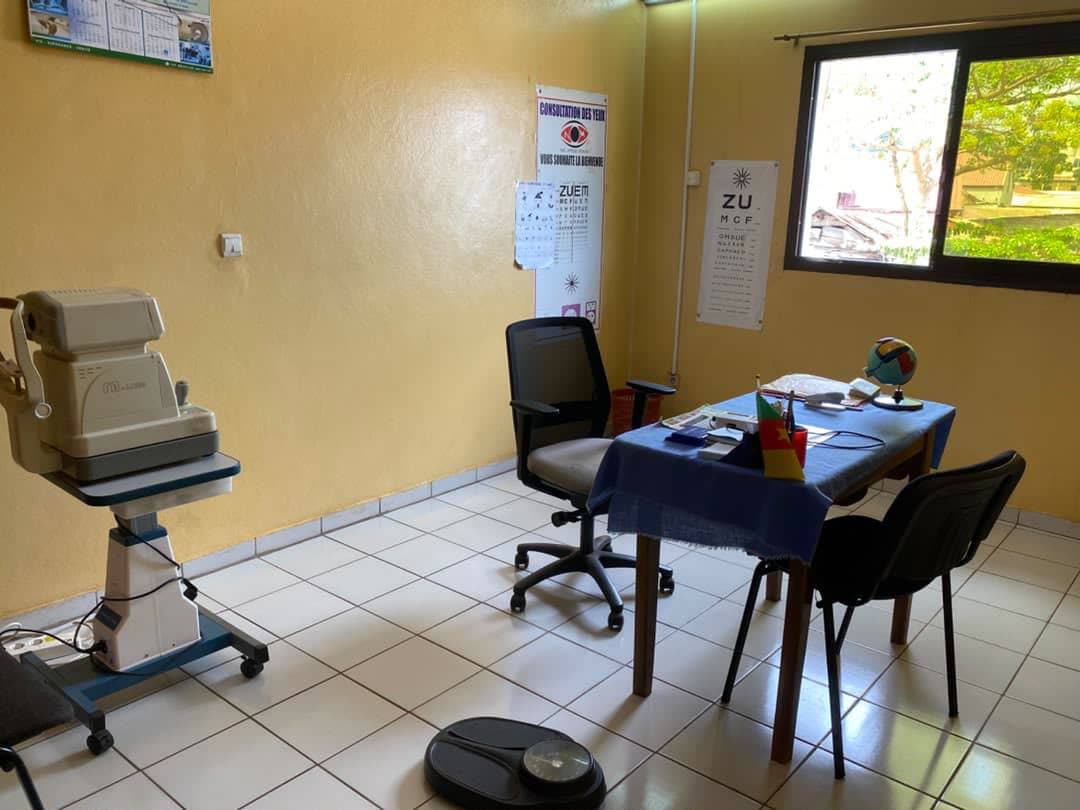
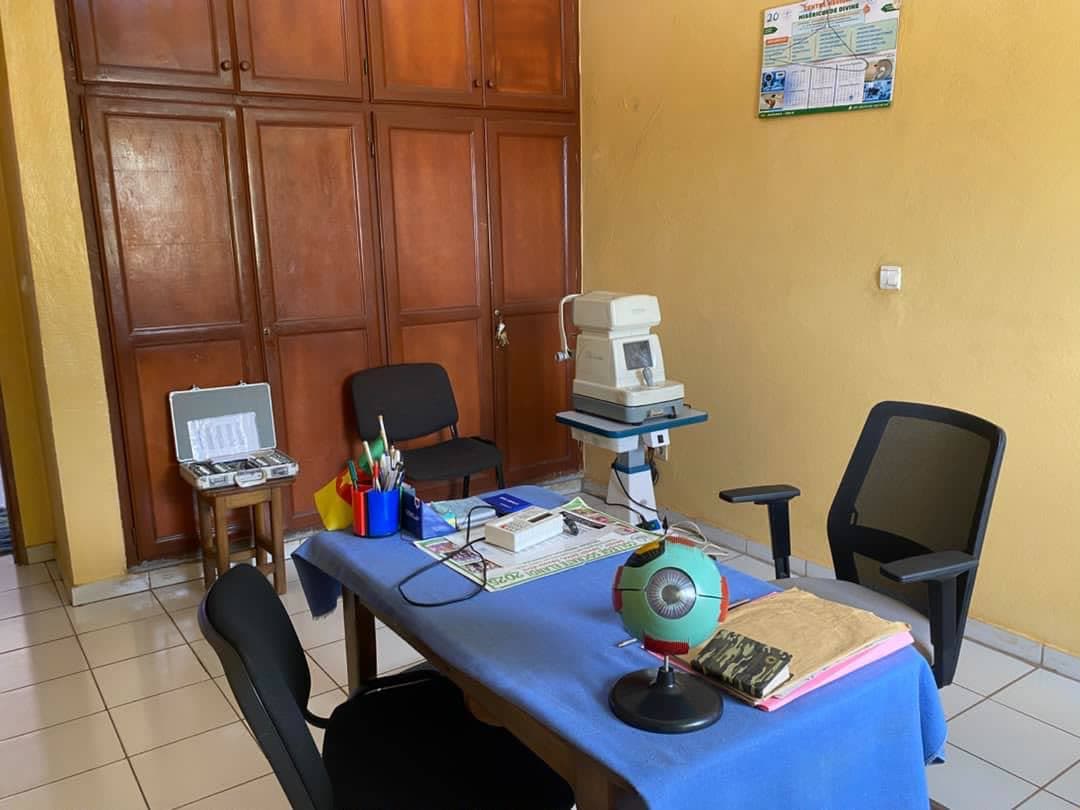
Write to the practice or call. Niss Optique Médical, a licensed optical practice, offers vision screening in schools, and in workplaces as well. Tell them how many pupils are involved, where the school is in Yaoundé and which dates suit you. No screening price is published here: for a quote, message 699 27 75 97 on WhatsApp, or call 651 10 22 00 or 651 88 59 90.
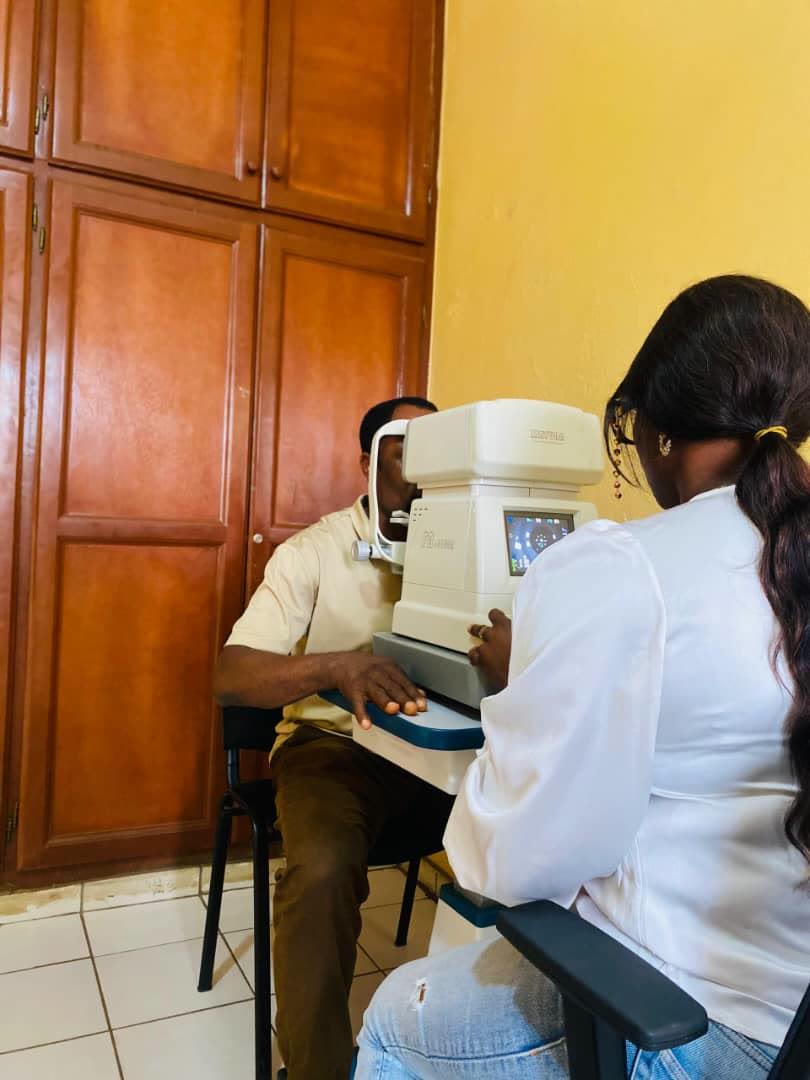
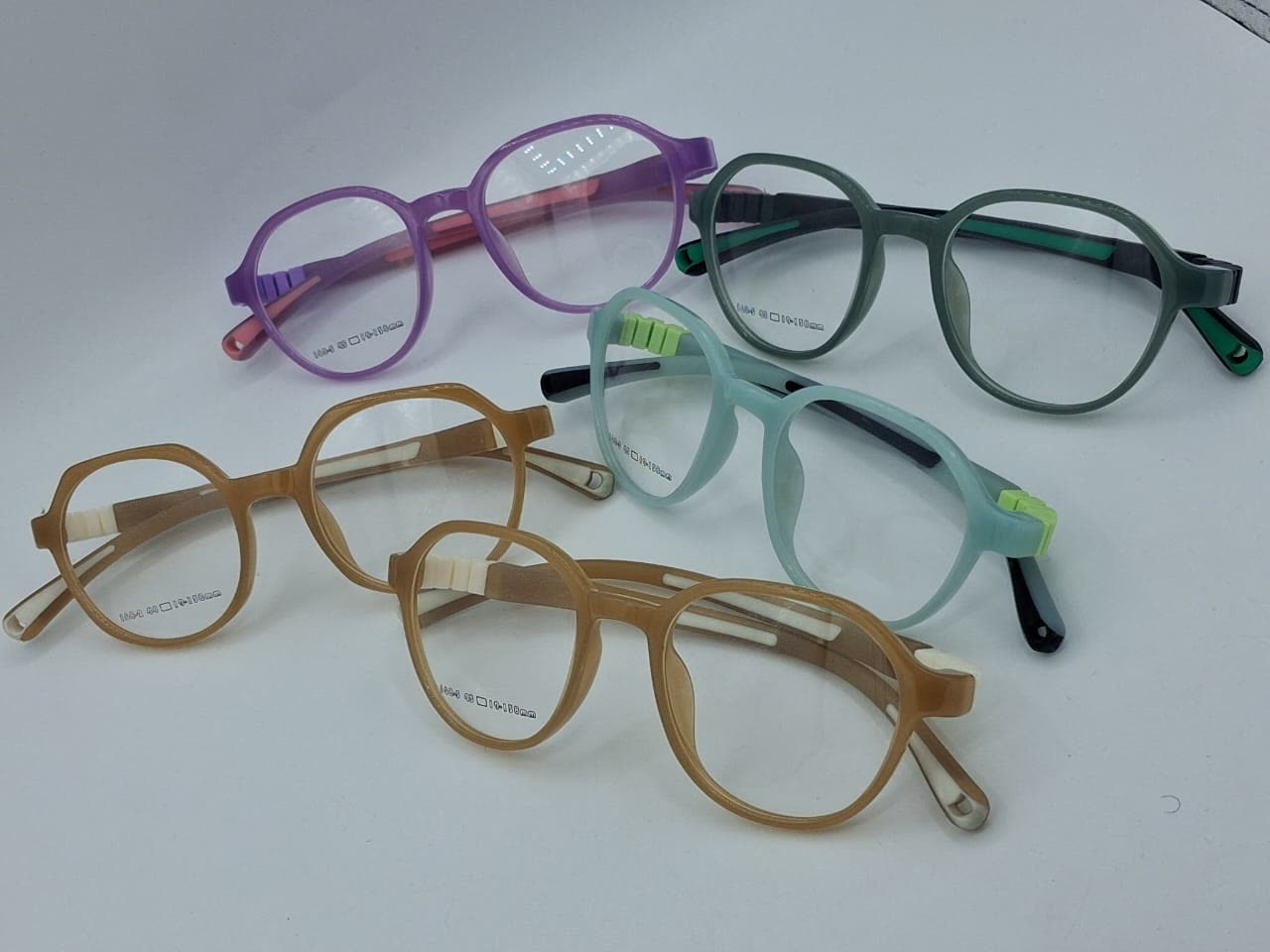
For a child who needs an exam, it is carried out at the practice by a refracting optician registered with the ONOC, Cameroon's national order of opticians. It costs 5,000 XAF, and it is free if the glasses are bought the same day. Frames range from 10,000 to 100,000 XAF, and the practice has frames for children. Glasses are ready in 24 hours; special-order lenses take 10 working days. You can pay in instalments, as long as everything is settled before collection.
The practice is at Descente Fanta Citron, Mvog-Ada, opposite the Direction des Mines, open Monday to Friday, 8:30 to 17:30, Saturday and public holidays, 9:00 to 15:30, and Sunday by appointment.
Frequently asked questions
- Does school vision screening replace an eye exam?
- No. Screening spots children who may need an exam. Only a full eye exam can establish a prescription.
- At what age should a child's eyes be screened?
- In France, school screening takes place in the first year of nursery school, at age 3 to 4. In the UK, it happens at around 4 or 5. A child can have an eye exam at any age if there is a doubt.
- How much does school vision screening cost in Yaoundé?
- The practice does not publish a price. Message 699 27 75 97 on WhatsApp with the number of pupils and the school's address to get a quote.
- What should I do if the screening flags a problem?
- Book a fuller eye exam. For eye pain, a red eye or a sudden loss of vision, see an ophthalmologist without delay.
Written by the Niss Optique Médical team, under the responsibility of its ONOC-registered refracting optician (N° 155/ONOC/2023).
This article gives general information. It does not replace an eye exam. For pain, a red eye or a sudden loss of vision, see an ophthalmologist.