Myopia (short-sightedness): signs, causes and correction
Short answer: Myopia, or short-sightedness, means close objects look clear but distant ones look blurred. It usually happens when the eye is slightly too long, so light comes to a focus in front of the retina instead of on it. It often starts in childhood, is measured during an eye exam, and is corrected with glasses or contact lenses.
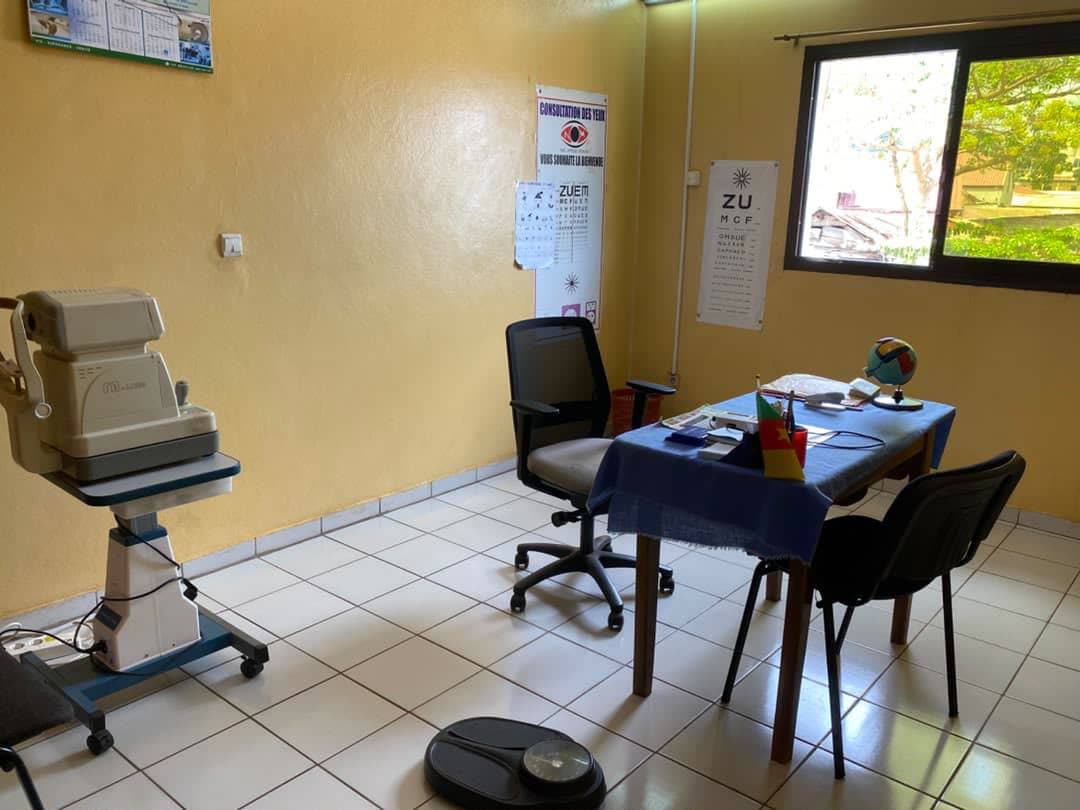
What is myopia?
Myopia is a refractive error: a short-sighted eye sees well up close, but things far away are blurred. The MSD Manuals (consumer version) explain that the eyeball is too long for the focusing power of the cornea and lens, so light is focused in front of the retina rather than on it.
The American Academy of Ophthalmology (article of January 2026) adds another possible cause: a cornea that is too steeply curved. Either way, the image lands a little too early. A short-sighted eye is not lazy. If anything, it is in a hurry.
Myopia is not an eye disease. It is an optical error, like astigmatism or long sight, and astigmatism can come on top of it: our article on astigmatism explains the difference.
What signs mean you should get your eyes checked?
The main sign is blur in the distance while reading up close stays comfortable. The American Academy of Ophthalmology also lists eye strain, headaches, squinting to see clearly, and poorer vision at night.
- You read road signs and taxi numbers later and later.
- You only recognise people across the street once they are close.
- You squint at the television or from the back of a room.
- Driving at night feels harder than it used to.
- A child struggles to read the board at school.
In everyday Yaoundé life, it often looks like the list below. And no, the shop signs along the road have not all started using smaller letters.
Why does myopia often start in childhood?
Because the eye grows with the child. According to the American Academy of Ophthalmology, myopia is often found between ages 8 and 12, may get worse during the teenage years, and usually changes little between 20 and 40. The MSD Manuals also note that it often increases until a child stops growing.
Family history plays a part: a child with a short-sighted parent is more likely to be short-sighted, but genes are only one factor. The American Academy of Ophthalmology says that too much time indoors raises a child's risk, and more time outdoors in daylight lowers it.
In its prevention messages on myopia (the "mMyopia" programme), the World Health Organization suggests encouraging children to spend at least 90 minutes a day outdoors in daylight, and to take a break every 20 minutes when reading or using a screen. Daylight is not in short supply in Yaoundé. A hat and a patch of shade let children enjoy it without the sunburn.
Short-sighted children rarely complain, because they assume everyone sees the way they do. Our article on school vision screening lists the classroom signs worth watching for.
How is myopia corrected?
Most often with glasses or contact lenses, which bring the image back onto the retina. For adults, laser refractive surgery is another option: the MSD Manuals say the best candidates are at least 18 years old, and the decision is made with an ophthalmologist.
For children, some treatments aim to slow down how fast myopia progresses. These are a matter for an ophthalmologist, who can say whether they are suitable. The WHO also makes a simple point: everyone should wear glasses prescribed for their own eyes, not a sibling's or a neighbour's. Glasses are a poor thing to borrow, even from a good friend.
Because myopia can change, especially while a child is growing, the prescription should be checked regularly. Glasses that are too weak protect nothing. They just bring the squinting back.
Does strong myopia need monitoring?
Yes. The American Academy of Ophthalmology explains that people with severe myopia have a higher risk of retinal detachment, glaucoma and cataracts, and should see an ophthalmologist regularly to have the retina examined. The stronger the myopia, the more that follow-up matters.
Glasses do not replace that check-up, and the check-up does not replace glasses. You need both, like a good tailor and good fabric.
This article is general information and does not replace an eye exam. If you have eye pain, a red eye or a sudden loss of vision, see an ophthalmologist without delay.
Where can I have myopia measured in Yaoundé?
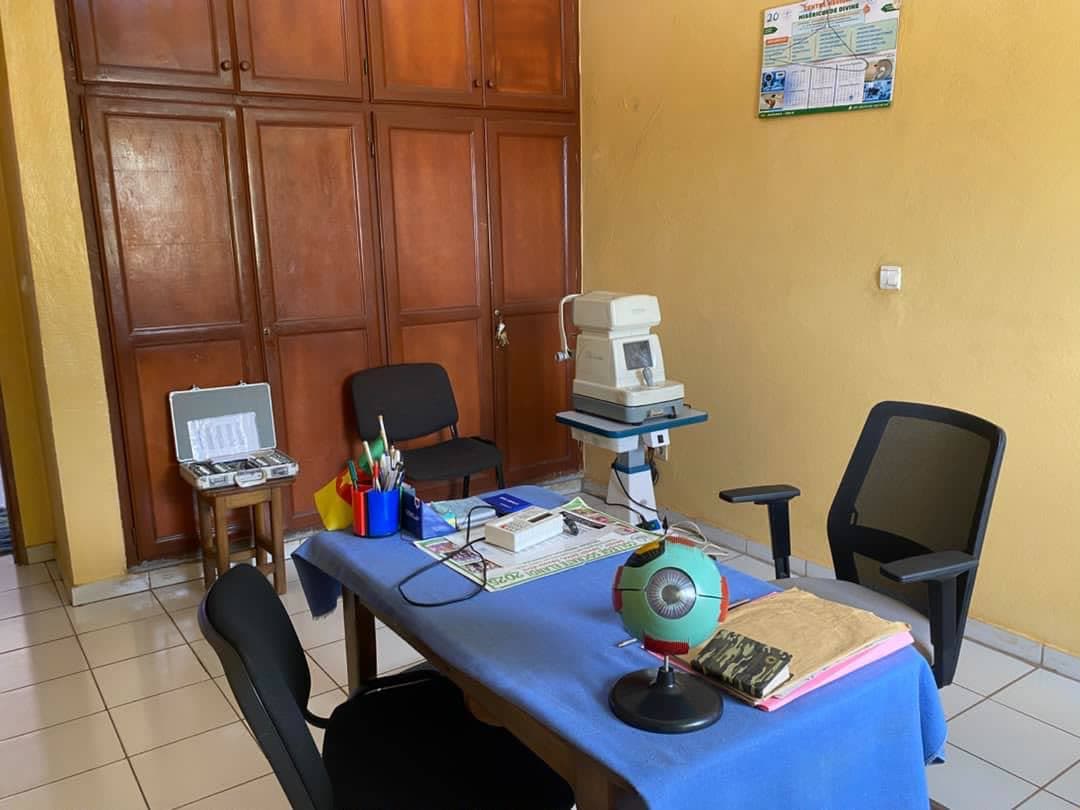
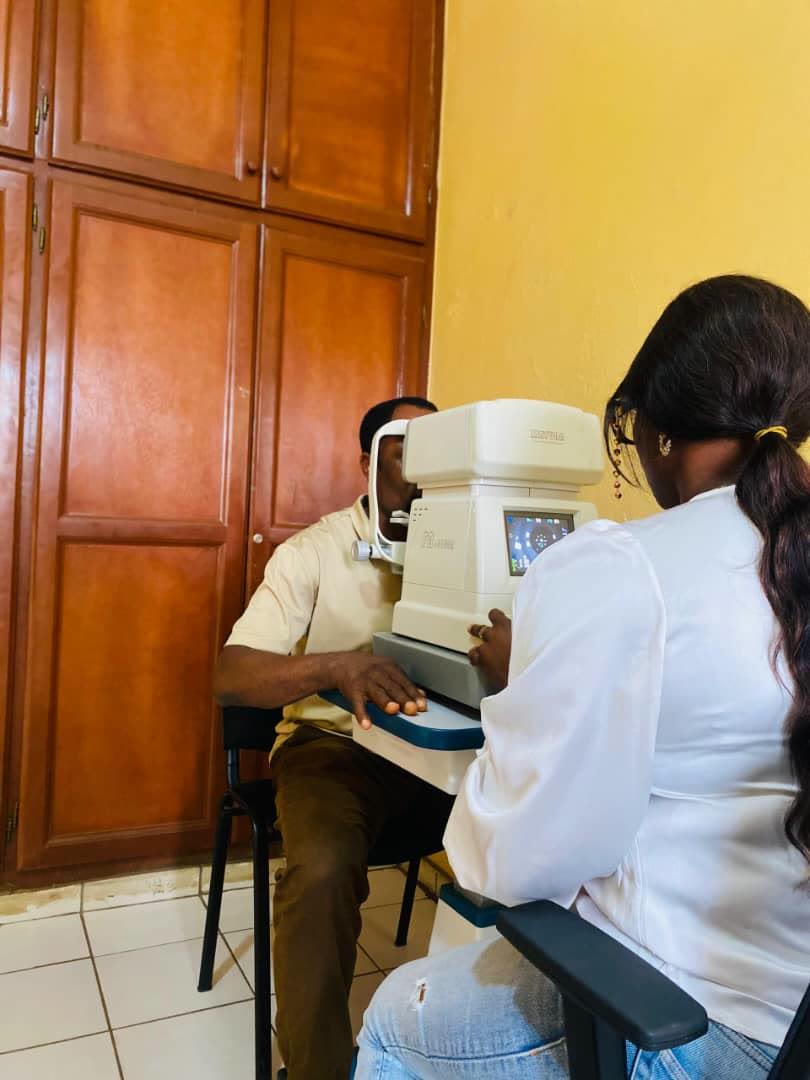
At Niss Optique Médical, Descente Fanta Citron, Mvog-Ada, opposite the Direction des Mines. The eye exam is carried out by a refracting optician registered with the ONOC, Cameroon's national order of opticians. It costs 5,000 XAF, and it is free if you buy your glasses the same day.
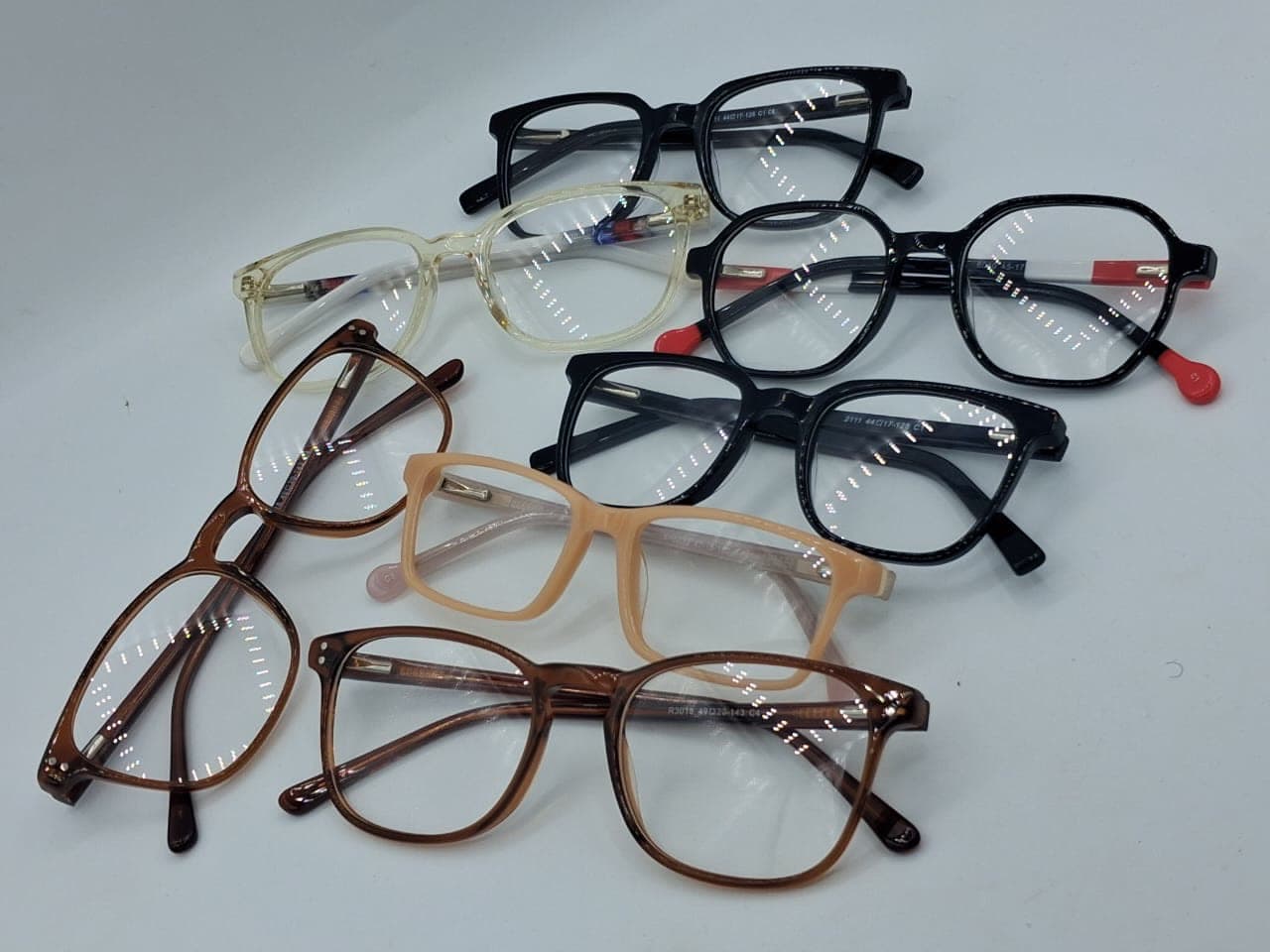
Frames range from 10,000 to 100,000 XAF, and glasses are ready in 24 hours, progressive lenses included; some special-order lenses take 10 working days. You can pay in instalments, settled before you collect your glasses. For the price of your lenses, ask for a quote on WhatsApp at 699 27 75 97, or call 651 10 22 00 or 651 88 59 90.
Niss Optique Médical, a licensed optical practice, is open Monday to Friday, 8:30 to 17:30, Saturday and public holidays, 9:00 to 15:30, and Sunday by appointment.
Frequently asked questions
- Is myopia a disease?
- No. Myopia is a refractive error: the eye sees clearly up close and blurred in the distance. It is usually corrected with glasses or contact lenses.
- At what age does myopia start?
- It is often found between ages 8 and 12, may increase during the teenage years, and usually changes little between 20 and 40, according to the American Academy of Ophthalmology.
- Do glasses make myopia worse?
- No. Glasses correct the blur; myopia can progress while a child grows, with or without glasses. That is why the prescription should be checked regularly.
- Can you be short-sighted in one eye only?
- Yes. The two eyes do not always need the same correction, and an eye exam measures each eye separately.
Written by the Niss Optique Médical team, under the responsibility of its ONOC-registered refracting optician (N° 155/ONOC/2023).
This article gives general information. It does not replace an eye exam. For pain, a red eye or a sudden loss of vision, see an ophthalmologist.